
The honest answer to how much it costs to maintain a swimming pool: more than most people expect, and far less than you’ll spend if you let things slide. I’ve coached at a club with a 25-meter indoor pool for years, which means I’ve watched what happens when pool maintenance gets treated as optional. A typical residential in-ground pool runs between $1,200 and $1,800 per year in routine upkeep costs, not counting repairs or equipment replacement. Here’s what that actually breaks down to, and where you can control costs without compromising water quality.
How Much Does it Cost to Maintain a Swimming Pool?

Determinants of Pool Maintenance Expense
The expense associated with the upkeep of your swimming pool is influenced by several factors:
- Type & Size of the Pool: In-ground pools cost more to maintain than above-ground, mainly because the surface area is larger and the plumbing is more complex. A standard 12×24 foot in-ground pool will run roughly 30-50% more annually in maintenance than a comparable above-ground model. Bigger pools need more chemicals, more water turnover, and significantly more cleaning time each week.
- Geographical Location & Climate: In San Diego, where I spend most of my time in or near pools, year-round swimming means year-round maintenance costs with no winter break. Warmer climates also mean more algae growth, so chemical costs run consistently higher than in cooler regions. Dense tree coverage nearby adds another layer of cost through constant skimming and clogged filters.
- Material of the Pool: Fiberglass resists algae better than concrete or vinyl, which translates to lower chemical costs over time. Vinyl liner pools are cheaper to build but the liner needs replacing every 7-12 years. Concrete pools require the most ongoing work, including more frequent brushing, periodic acid washing, and eventual resurfacing every 10-15 years.
- Maintenance Schedule of the Pool: Weekly service is genuinely cheaper in the long run. I’ve watched pools get neglected for a single month and then require $400-$600 in shock treatment and algaecide to recover. A consistent 30-minute weekly routine prevents most of those expensive corrections before they start.
Regular Maintenance Tasks
Regular maintenance prevents costly repairs and keeps water quality where it needs to be:
- Cleaning: Skim the surface every day or two, brush the walls weekly, and vacuum the floor at least once per week. A robotic pool cleaner ($300-$800 upfront) cuts the manual labor significantly over a season and is worth the investment for any in-ground pool that gets regular use.
- Chemical Balancing: For a standard in-ground pool, budget $600-$900 per year on chemicals. That covers chlorine (tablets or liquid), pH adjusters, alkalinity increaser, calcium hardness, and occasional shock treatments. Buying chemicals in bulk at the start of the season saves 15-20% versus buying as needed. For one of the most common chemical imbalances I see in residential pools, my guide on how to reduce alkalinity in a swimming pool walks through the correction process step by step.
- Filter Cleaning: Clean your filter every 2-4 weeks, or when the pressure gauge reads 8-10 psi above its clean baseline. Cartridge filter replacements run $50-$150 per cartridge and are needed every 1-2 years. Sand filters need backwashing weekly and full sand replacement every 5 years, which costs $50-$100 for the sand alone.
- Water Testing: A solid test kit costs $25-$60, and I test water at least twice a week during the swimming season. Digital testers in the $50-$100 range give more accurate readings than test strips and pay for themselves in fewer overcorrection cycles. Strip test kits still work and run $20-$40 for a well-stocked set.
Doing this yourself versus hiring a service is the central cost decision every pool owner faces. Professional weekly service runs $80-$150 per month, which adds up to $960-$1,800 per year. DIY typically costs $50-$100 per month for chemicals plus your time. For above-ground pool owners, the cleaning process is more straightforward than most people assume and is well worth handling yourself.
Pool Opening and Closing
At the beginning and end of the swimming season, two important processes must be considered:
- Pool Opening Cost: Professional pool opening typically runs from $300 to $500. A DIY opening costs $50-$100 in chemicals plus a few hours of your time. The main expense is an opening chemical kit covering algaecide, shock, and pH adjusters. Pool supply stores reliably stock higher-concentration products than big-box retailers, which matters when you’re treating a full pool that has been closed for months.
- Pool Closing: Winterization runs $150-$300 professionally. The main DIY expenses are a pool cover ($50-$500 depending on type and quality), a winter chemical kit ($30-$60), and antifreeze for the lines if you’re in a hard-freeze climate ($15-$30). A quality cover also reduces the debris that accumulates over winter, which directly cuts how much work the spring opening requires.
Long-Term Maintenance and Repairs
Major Repair Works and Costs
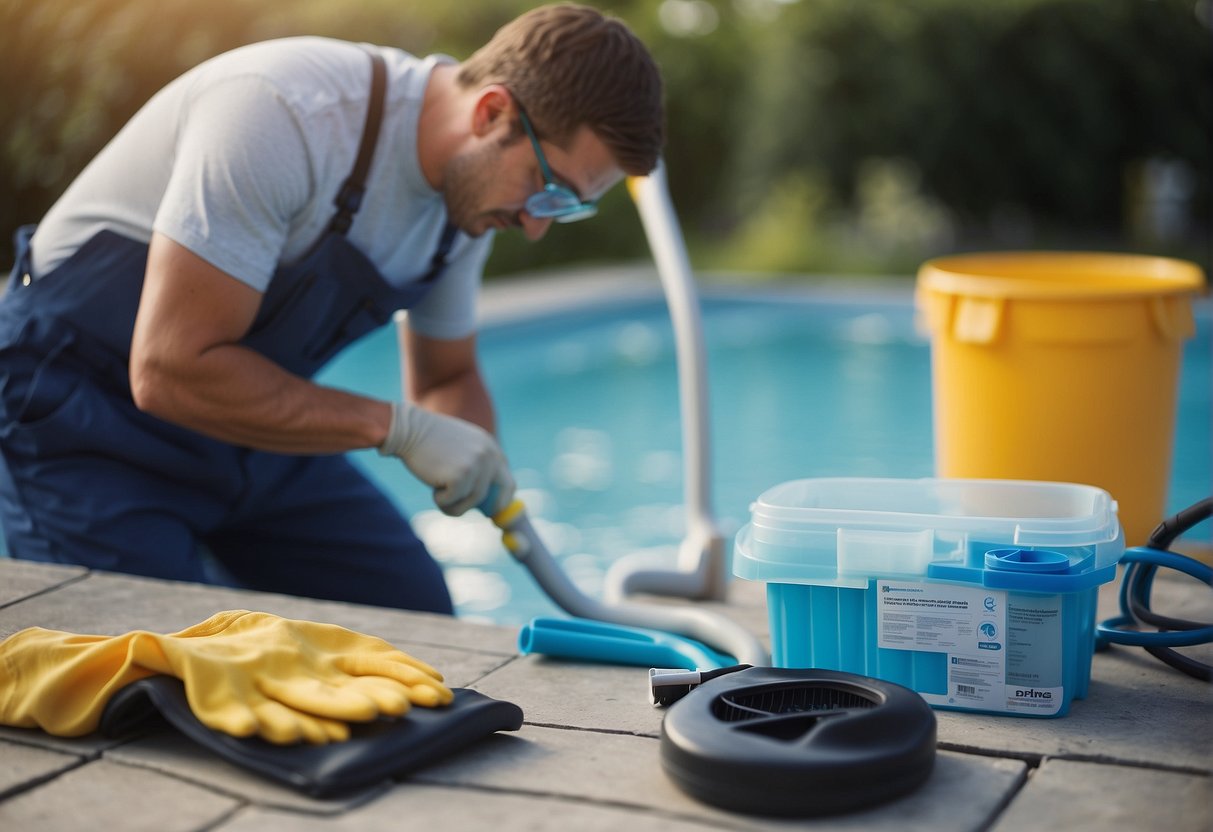
Every pool needs significant work at some point. I track maintenance costs closely at the club where I coach, and the repair category is where personal pool budgets consistently get surprised. The figures below are realistic industry averages. Actual prices vary by region and contractor, with labor running meaningfully higher in coastal cities.
- Liner Replacement: Vinyl liners last 7-12 years before they fade, crack, or develop leaks. Above-ground liner replacement runs $350-$700. In-ground vinyl liner replacement typically costs $1,500-$3,500. Total cost including labor ranges from $1,000 to $4,500 depending on pool size and liner thickness.
- Leak Detection and Repair: If you’re adding more than an inch of water per week beyond normal evaporation, you likely have a leak. Professional leak detection costs $200-$500. Repair cost ranges from $100-$300 for a simple fitting or light seal up to $1,000-$5,000 for a structural crack in a concrete pool.
- Drain and Clean: A full drain, thorough cleaning, and refill is typically needed every 3-7 years for concrete pools, or whenever algae has become embedded in the surface. Cost ranges from about $600 to $2,500 depending on pool size and the level of buildup.
- Pool Resurfacing: For concrete pools, resurfacing is unavoidable every 10-15 years. Standard plaster resurfacing runs $4-$7 per square foot, totaling roughly $3,500-$6,000 for a typical residential pool. Pebble Tec or quartz aggregate finishes cost $5-$10 per square foot and last longer between resurfacing cycles.
Replacing Pool Equipment
Equipment fails on a predictable enough schedule that you can budget for it. I recommend setting aside $200-$300 per year in a pool maintenance reserve specifically for equipment. Here’s what will need replacing eventually and what it typically costs.
- Pump Motor: A replacement pump motor runs $200-$350. Full pump unit replacement is $300-$600. Variable-speed pumps cost $500-$1,200 upfront but cut energy consumption by 50-70%, and the savings typically cover the price premium within 2-4 years. If your single-speed pump needs replacement anyway, upgrading to variable-speed is the rational call.
- Pool Filters: Cartridge filter replacements cost $50-$200 per cartridge depending on size. Sand replacement runs $50-$100 and is needed every 5 years. D.E. filter grids run $50-$150. Full filter housing replacement ranges from $150 to $700 depending on type and capacity.
- Salt Cell Replacement: Salt cells in chlorine-generator systems last 3-5 years and cost $200-$700 to replace. If you’re weighing whether a saltwater system makes financial sense over a traditional chlorine setup, my full breakdown on how to maintain a saltwater pool covers the real long-term cost comparison.
- Comprehensive Maintenance: Monthly professional pool maintenance averages $80-$200 depending on location and pool size. Annual service contracts run $960-$2,400. Individual service calls for specific repairs typically start with a $75-$100 call-out fee before any parts or labor costs are added.
Pool size, type, and location all affect these numbers significantly. A 20×40 concrete pool in Florida costs substantially more to maintain than a 12×24 fiberglass pool in Michigan. The most useful thing you can do in the first two seasons is document your actual costs, which gives you a real baseline instead of estimates that may not apply to your specific setup.
Cost Optimization and Pool Types
Choosing the Right Pool Type
The type of pool you install has a direct and lasting impact on annual maintenance costs. Fiberglass pools are the lowest-maintenance option by a significant margin. The smooth gelcoat surface resists algae, which cuts chemical costs by an estimated 30-50% compared to concrete. Fiberglass also retains heat better than concrete, which matters if you run a heater and pay attention to your energy bill.
On the other hand, chlorine and saltwater pools have meaningfully different ongoing cost profiles. A saltwater chlorine generator costs $1,500-$3,000 to install, but ongoing salt costs run just $5-$20 per year versus $300-$600 annually for chlorine tablets or liquid. Salt cells need replacement every 3-5 years at $200-$700, but the net savings over a decade are real for most pool owners who swim regularly.
Energy and Resource Saving Tips
A pool cover is the single most cost-effective purchase you can make after the pool itself. A quality cover reduces water evaporation by up to 95%, cutting your water bill noticeably in dry or hot climates. It also reduces heat loss by 50-70%, directly lowering heating costs. A solar cover ($50-$150) warms the water passively using sun exposure and extends your swim season by 3-4 weeks in most US climates, without any added energy cost.
Your pool pump uses more electricity than most other appliances in the house. Running a standard single-speed pump for 8 hours per day costs roughly $600-$900 per year at average US electricity rates. A variable-speed pump running equivalent filtration cycles drops that to $180-$300 per year. Keeping your water chemistry balanced also extends equipment life: off-pH water corrodes metal components and degrades seals faster, leading to earlier pump and filter failures that cost far more than a test kit.
Optimizing Maintenance Costs
Understanding and managing your pool maintenance tasks consistently is what actually moves the needle on cost. Here’s a simple breakdown based on what I’ve tracked over years of managing a club pool:
- Routine Cleaning: A $15 leaf skimmer, a $25 pool brush, and 20 minutes per week prevents the algae buildup that costs hundreds to correct. Consistency matters more than any product you can buy.
- Chemical Testing: Test twice per week during the swim season. Strip test kits cost $10-$15 for a 50-count pack. The cost of a single test is negligible compared to correcting unbalanced water, which typically means buying shock, algaecide, and pH adjusters all at once.
- Equipment Tune-up: Inspect your pump basket and filter pressure gauge weekly. A clogged pump basket forces the motor to work harder and shortens its lifespan. Most equipment failures I’ve tracked at the club trace back to something small that got ignored for too long.
- Smart Timing: Schedule larger jobs like filter sand replacement or acid washing in the fall. Contractors are less busy and some offer off-season rates 10-20% below peak pricing. Pool opening supplies are also cheaper in March than in June when demand spikes.
The math on pool maintenance is straightforward: a pool that gets consistent care for $1,200-$1,500 per year holds its value and stays swimmable season after season. Reactive maintenance, fixing things only when they break, typically costs significantly more in years 5-10 when multiple systems need replacement at once. If you’re planning a pool build and want to factor cost into that decision from the beginning, my guide on how to build a cheap swimming pool covers where the real savings are in construction and materials.
FAQ:
Are swimming pools hard to maintain?
Maintaining a pool isn’t technically difficult, but it requires consistency. The core routine (skimming, chemical testing, and filter checks) takes 30-45 minutes per week. What most people find hard isn’t the individual tasks but keeping up with them week after week. I tell people to treat it like oil changes: easy to skip, expensive to ignore.
How much does it cost per month to run a pool pump?
A standard single-speed pump running 8 hours per day costs $50-$80 per month in electricity at average US rates. A variable-speed pump running the same hours drops that to $15-$25 per month. Most pool owners I know significantly underestimate this line item until they see their first summer electricity bill.
How much does it cost to run a pool per month in the UK?
In the UK, running a pool costs around £80-£150 per month for a heated indoor pool, or £40-£80 for a seasonal outdoor pool. Electricity and heating account for the majority of that cost, with chemicals adding £20-£40 per month depending on pool size and usage frequency.
How often does a pool need to be cleaned?
Basic skimming should happen every 1-2 days during the swim season. Full cleaning (skimming, brushing, vacuuming, and a chemical check) should happen at least once per week. If your pool gets heavy use or sits under trees, twice-weekly cleaning keeps the chemistry more stable and prevents the debris buildup that leads to algae.