
I have coached swimmers for years, and I can tell you this fast: the best house pool design is the one you will actually use on a Tuesday night, not just photograph on a sunny Saturday.
When I review backyards, I look at three practical things first: sun exposure at different hours, wind direction, and how people will move from kitchen to water without turning the deck into a wet traffic jam.
These are not random inspiration shots. I picked and grouped them because each one solves a different real-life problem, from family play time to low-maintenance training to a pool room you can use in January, and I added links to related ideas like backyard pool layouts and natural swimming pool builds so you can compare options before spending serious money.
Indoor & Glass-Enclosed Pools
I put these first because they get asked about the least and matter the most: a pool room you can actually use in December changes the math on the whole project.
1. Glass Conservatory Pools
Glass conservatory pools solve a real problem for northern climates: swimmers who want water access every month of the year, not just June through September. The all-glass roof and folding doors here let the room breathe on warm afternoons and seal completely once temperatures drop.
I steer clients toward this option when the lot backs onto trees or a fence line, since the enclosure blocks wind without losing the outdoor view.
What people underestimate is humidity control. Skip the dehumidification budget and the glass fogs, the frames corrode, and the room smells damp within two winters.
2. Tropical Glasshouse Pools
This is the design I turn to when a client wants a jungle feel without the upkeep of an actual outdoor garden. The glass pyramid roof keeps the palms alive through winter while the water underneath stays a steady, swimmable temperature.
I have watched enough of these builds to know the plant selection makes or breaks the space. Go too tropical and leaf drop clogs the filter every week.
Choose slow-growing varieties in large pots instead of in-ground beds, and the tropical look stays gorgeous with about twenty minutes of upkeep a week.
3. Indoor Pools with Waterfall Walls
A stone waterfall at the far end of an indoor pool does two things most homeowners do not expect: it masks street noise and it keeps the air moving so the glasshouse does not feel stagnant.
I would only add a feature like this if the pump and plumbing are sized correctly from day one. Retrofitting a waterfall wall after the shell is poured rarely looks intentional.
In a timber-framed room like this one, the beams need a sealant rated for pool humidity, or you are refinishing them within five years.
4. Evening Glasshouse Pools
Most glass-roofed pools get photographed at noon, which misses the point. This one is at its best after sunset, when string lights turn the trusses into the main feature and the water goes dark and calm.
I always ask clients who want this look how often they actually swim after dark. If the honest answer is rarely, spend less on the lighting rig and more on daytime shade instead.
For the people who do swim at night, dimmable warm-white bulbs beat anything colored. Colored lighting reads like a hot tub, not a pool room.
5. Ambient-Lit Indoor Pools
Recessed cove lighting along the ceiling and glowing entry steps turn an ordinary indoor pool into something closer to a spa. The trick is that the light source stays hidden, so you see the glow, not the fixture.
I have seen this go wrong when installers use blue LED strips instead of warm white, which makes the water look artificial in photos and worse in person.
This setup earns its cost in a pool used mostly in early morning or after work, when natural light is already gone and mood matters more than visibility.
6. Architectural Pool House Additions
A glass-box addition built specifically to house the pool, separate from the main living space, gives you climate control without redesigning the whole home around swimming.
This works best as a true addition with its own foundation and ventilation, not a retrofit tacked onto an existing patio. The water feature spilling from the side wall here needs plumbing planned at the same stage as the pool shell.
I recommend this path when someone wants an indoor pool but is not ready to touch the footprint of the house itself.
Modern & Minimalist Pools
Once the enclosure question is settled, most of my clients land somewhere in this group. Clean lines read well in every climate and age better than a trend-driven shape.
7. Modern Geometric Pools
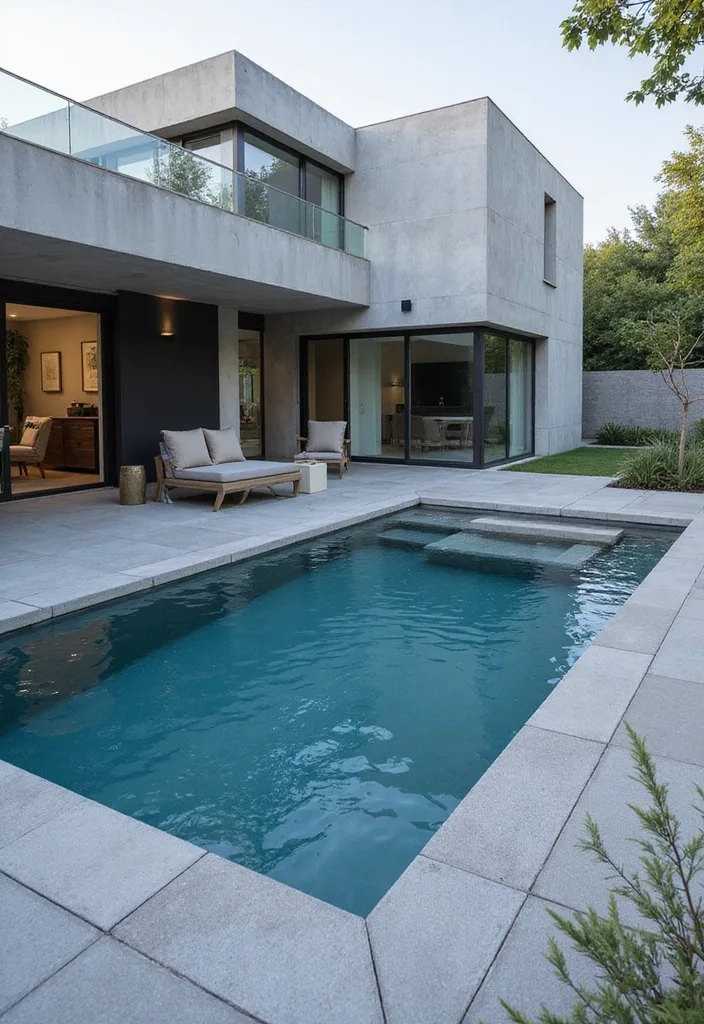
Modern geometric pools are great when your house already has contemporary lines and you want the backyard to match that language. Think strong rectangles, disciplined spacing, and very intentional material transitions.
I usually pair this style with large-format pavers, bench seating built into one long wall, and a narrow planting palette so the eye stays on form. If you want extra inspiration, the detailing in these glass pool examples shows how clean edges can still feel warm.
Who is this for? Homeowners who prefer order, symmetry, and low visual clutter. If your lifestyle is more playful and family-heavy, a softer layout might age better as your needs change.
8. Infinity Edge Pools
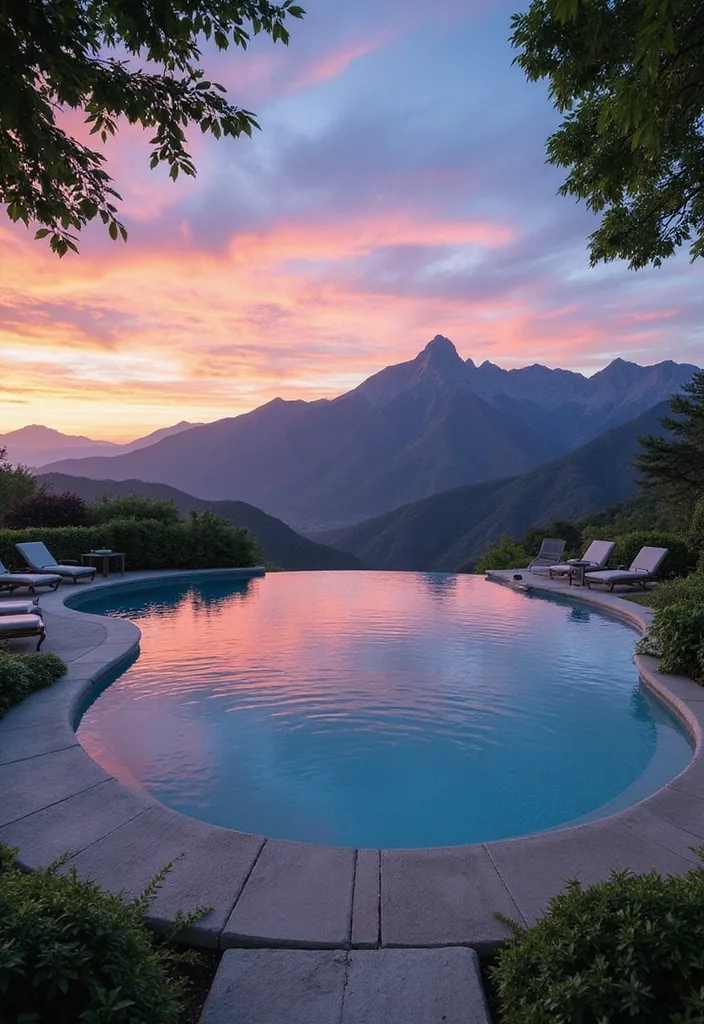
Infinity edge pools work best when your property has a true visual drop, such as a hill, canyon line, or open view behind the lot. Without that backdrop, the effect can feel forced and expensive for no real payoff.
From a design standpoint, I like them for homeowners who want calm, mirror-like water and clean architecture. You get the strongest result with dark interior finishes, low-profile coping, and lighting that stays subtle instead of nightclub-bright.
The honest answer is that maintenance planning matters more here than with a basic rectangle. You need a well-sized catch basin, easy service access, and strong circulation, or the edge beauty turns into a daily headache.
9. Minimalist White Villa Pools
An all-white house with a glass-railed balcony over the pool works best when the architecture is genuinely minimal, not just painted white over a busy roofline. Clean walls let the pool read as the main event.
My honest take is that this look photographs beautifully and lives well only if the owner stays disciplined about clutter. One pool float left out ruins the whole composition.
If your household is not naturally tidy outdoors, build in hidden storage for toys and towels before you commit to this aesthetic. That is the difference between magazine-ready and messy.
10. Contemporary Black-Frame Pools
Black window frames against a white facade make a pool look sharper in photos than almost any other combination, and the L-shaped tanning ledge here adds real function, not just style.
I tell clients a tanning ledge is worth the extra excavation cost if anyone in the house has young kids, or simply prefers sitting in six inches of water to swimming laps.
One consult I did in Colorado used this exact layout, and the ledge became the most-used part of the pool that first summer, more than the deep end ever was.
11. Modern Concrete Pools with Fire Accents
Dark tile and fire-lit steps against a concrete facade make a pool feel like part of the architecture after dark rather than a separate feature bolted onto the yard.
The honest answer on fire features is that most owners use them for the first year and then rarely again once the novelty wears off. Budget for them only if you genuinely entertain outdoors at night on a regular basis.
For everyone else, the same dark tile and clean lines work just as well with simple underwater lighting at a fraction of the ongoing gas cost.
Classic & Estate Pools
For houses with real architectural weight, restraint is the whole strategy. These three styles all resist the urge to compete with the building behind them.
12. Elegant Classic Pools
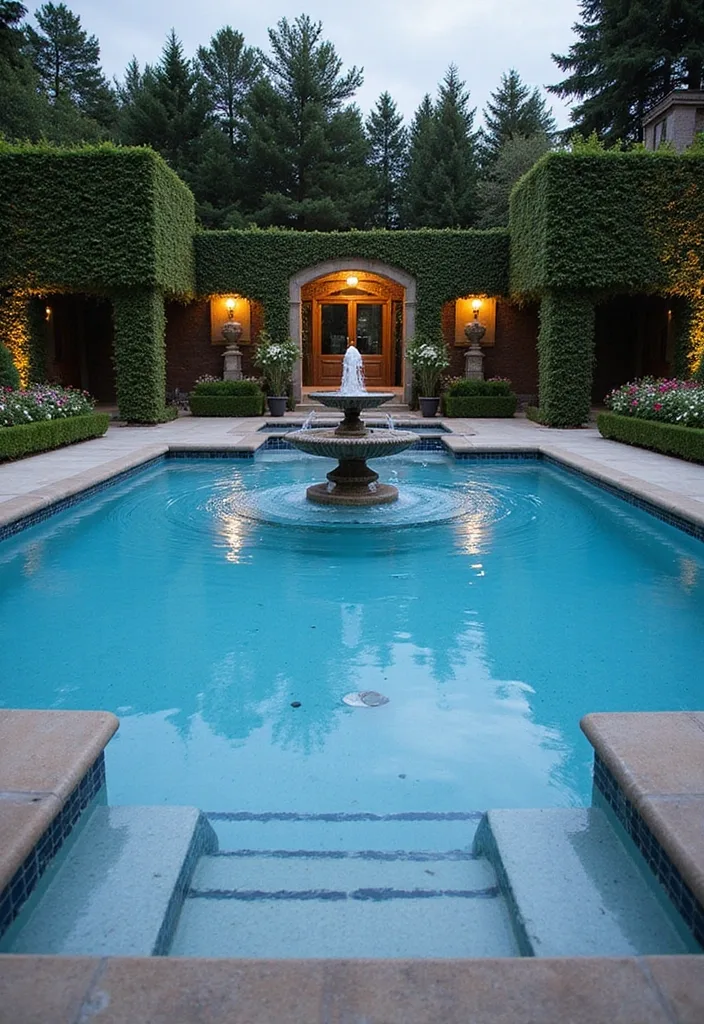
Elegant classic pools are the safest long-term choice if you care about resale and timeless curb appeal. They age well because they rely on proportion and craftsmanship, not trend-heavy features.
I usually think Roman or soft-rectangular forms, balanced symmetry, and premium but restrained materials. A subtle fountain or raised wall can add character, but this style looks strongest when details stay disciplined.
Who is this for? Homeowners with traditional architecture, frequent evening hosting, and a preference for refined design that still feels welcoming to kids and guests.
13. Stone Manor Pools
A traditional stone or brick manor calls for a pool that stays quiet architecturally. Steel-framed windows and a simple rectangle, like the one here, let the house keep doing the visual work.
I steer most clients away from water features or colored tile in a setting like this. Anything too playful clashes with a facade this formal and dates the yard within a decade.
Budget instead for stone coping that matches the house material. That single decision does more for cohesion than any amount of landscaping around the edges.
14. Castle-Style Estate Pools
A stone house with a turret and deep balconies asks for a pool that respects the scale of the architecture rather than competing with it. The plain rectangle here does exactly that.
Few designs solve the problem of not overshadowing a dramatic house as well as restraint does. Ornate coping or a freeform shape would fight the building instead of framing it.
I always tell clients with estate-scale homes to spend the pool budget on landscaping and lighting around the water, not on the pool shape itself. The house should stay the star.
Resort, Entertaining & Lounge Pools
If your yard’s real job is hosting people, not just holding water, this is the group I point clients toward. Furniture and shade do as much work here as the pool shape.
15. Resort-Style Pools
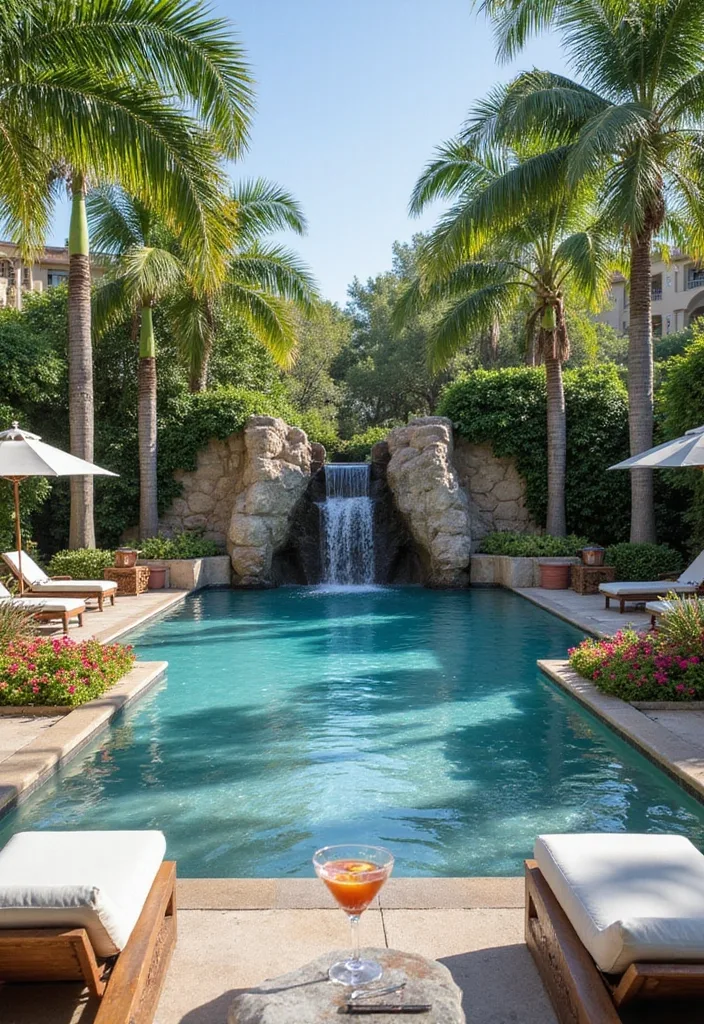
Resort-style pools are built for social energy. If you host often, this is one of the few designs where spending more on zones can make daily life easier, not just prettier.
I like to divide these projects into clear functions: conversation shelf, active swim lane, shaded lounge, and a hot-water corner for evening use. Last summer I visited a build where the owner placed seating too far from the grill area, and everyone kept crossing wet paths with food. Small layout fixes solve big usability problems.
This style is best for families and friend groups who treat the backyard like an outdoor living room. Plan for sound control, storage for towels, and enough deck depth so furniture never blocks circulation.
16. Modern Backyard Lounge Pools
A covered pergola with a full sectional sofa next to the pool changes how a family actually uses the yard. Instead of drying off and going inside, people stay outside for another two hours.
The detail that matters here is orientation. Face the lounge toward the pool, not away from it, so whoever is sitting can still watch kids in the water without craning their neck.
This setup suits households that entertain often but do not want a full outdoor kitchen. The furniture budget goes further than a built-in grill ever will.
17. Covered Poolside Loggias
A long covered loggia lined with daybeds next to a narrow lap-style pool turns lounging into the primary activity and swimming into a secondary one, which is honest about how most pools actually get used.
What sells me on this covered loggia is the stone column rhythm. It creates shade without a solid roof blocking the sky entirely, so the space stays bright even at midday.
I’d pick a pool shape this long and narrow only if lap swimming matters to someone in the house. Otherwise a shorter, wider pool serves lounging better for the same footprint.
18. Ibiza-Style Courtyard Pools
Stone and white stucco together, with an outdoor kitchen built into the same sightline as the pool, works because nobody has to walk far between cooking, eating, and swimming.
The detail that matters here is counter height and placement. Put the bar low enough that someone can hand a plate to a person still in the water, and the layout earns its keep daily, not just on party weekends.
This works best in genuinely warm, dry climates. The stucco and stone combination does not age gracefully anywhere with real humidity or freeze-thaw cycles.
19. Spanish Tile-Roof Pools
Red clay tile roofs and turf lawns pair naturally with a straightforward rectangular pool, and string lights over the dining area extend the space into evening use without a big electrical project.
The tradeoff nobody mentions is turf maintenance near a chlorine pool. Splash-out zones can bleach synthetic grass faster than people expect, so plan a hardscape buffer along the coping.
This style suits households that want warmth and color without the upkeep of real lawn. Just keep the pool a few feet further from the turf than looks strictly necessary.
Mediterranean, Tropical & Natural Pools
Mood-driven designs live or die on maintenance honesty. These six all trade some upkeep for atmosphere you cannot get from a plain rectangle, in different ways and different climates.
20. Tropical Paradise Pools
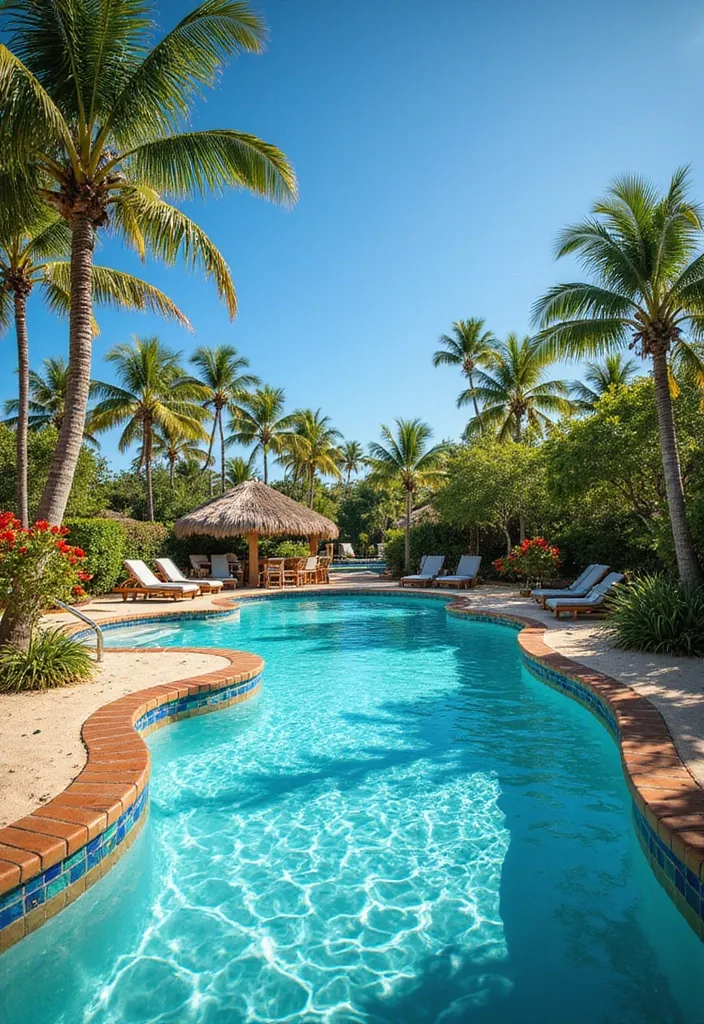
Tropical-style pools are about mood, texture, and sensory contrast. Warm stone, layered planting, and soft lighting can make an average suburban yard feel like a destination after work.
I advise owners to focus less on novelty features and more on comfort in heat. Shade placement, breeze channels, and deck materials that stay cooler under bare feet matter more than decorative props.
This style fits people who want vacation atmosphere at home and do not mind extra landscape upkeep. If that sounds like you, the right plant selection can turn even a compact pool into a rich, immersive space.
21. Mediterranean Courtyard Pools
White Cycladic architecture with French doors opening straight onto the pool blurs the line between indoor and outdoor living almost completely. Wake up, walk through the bedroom doors, and you are at the water.
I would only build this in a climate where those doors can stay open most of the year. Somewhere with real winters, the heat loss through that much glass gets expensive fast.
In the right climate, this is one of the few layouts where the furniture inside and the loungers outside can genuinely match without looking staged.
22. Palm Court Villa Pools
A small courtyard pool tucked beneath a rooftop pergola and a single mature palm proves you do not need a large lot to get a genuine resort feeling. Scale down the pool and the mood still holds.
A pool this size only works if it is deep enough to submerge in and shallow enough to lounge in. Split the difference or the whole point of going small gets lost.
This layout fits courtyard homes and infill lots best, the kind where a full-size pool was never going to fit in the first place.
23. Bali-Style Tropical Pools
A narrow pool tucked between bamboo screening and dense foliage turns a small side yard into a private plunge space, solving the real problem most compact lots have: no privacy for an in-ground pool at all.
I have walked clients through builds this size, and the lesson is always the same. Depth matters more than length here. Give up a few feet of swimming distance for enough depth to actually submerge and float.
This layout suits a household of one or two more than a family. There is no room here for pool toys or a crowd, and that is fine.
24. Natural Swimming Ponds
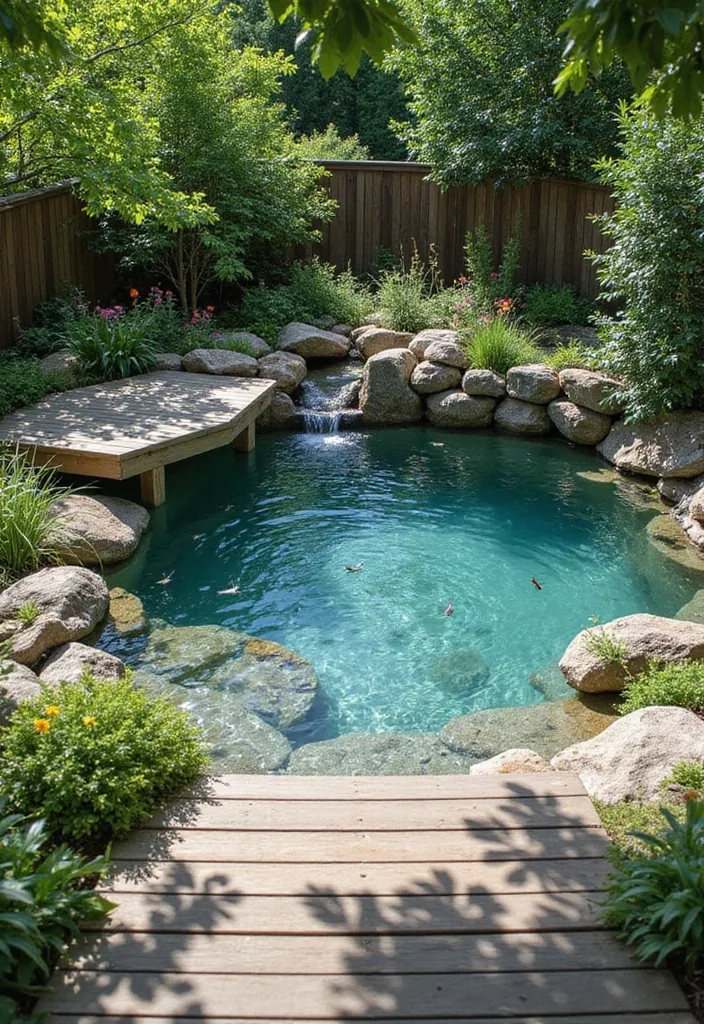
Natural swimming ponds are ideal for people who care more about atmosphere and ecology than sharp geometric lines. If you like the feeling of swimming in living water, this style can be deeply satisfying.
I recommend them for larger yards where you can separate a swim zone from a regeneration zone with plants and bio-filtration. Done right, the water feels soft on skin and the setting blends into the garden instead of looking like a dropped-in concrete shell.
One caution from projects I have reviewed: expect seasonal behavior. Plant cycles, debris, and temperature shifts are normal, so this option fits owners who enjoy tending a landscape, not owners who want push-button simplicity.
25. Rustic Natural Pools
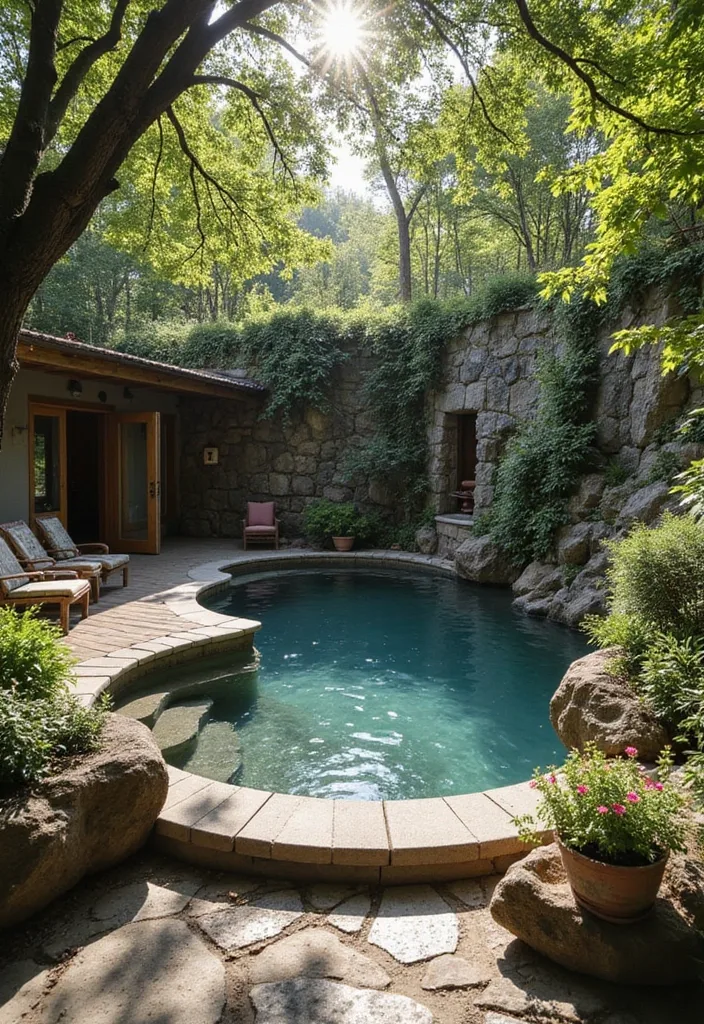
Rustic natural pools shine when the goal is comfort over polish. Irregular stone, textured plaster, and wood accents can make the space feel grounded instead of showroom-perfect.
I saw this work especially well in a hillside yard where the owners used local stone that matched existing retaining walls. The pool looked like it had always belonged there, and that visual continuity is hard to fake with imported finishes.
These builds suit homeowners who enjoy organic character and can accept a little patina over time. If you want every line laser-straight forever, choose a modern geometry instead.
Small-Lot & Practical Pools
Not every yard has room to be dramatic, and not every homeowner wants that anyway. These four solve real constraints, tight lots, mobility needs, high water tables, busy schedules.
26. Lap Pools
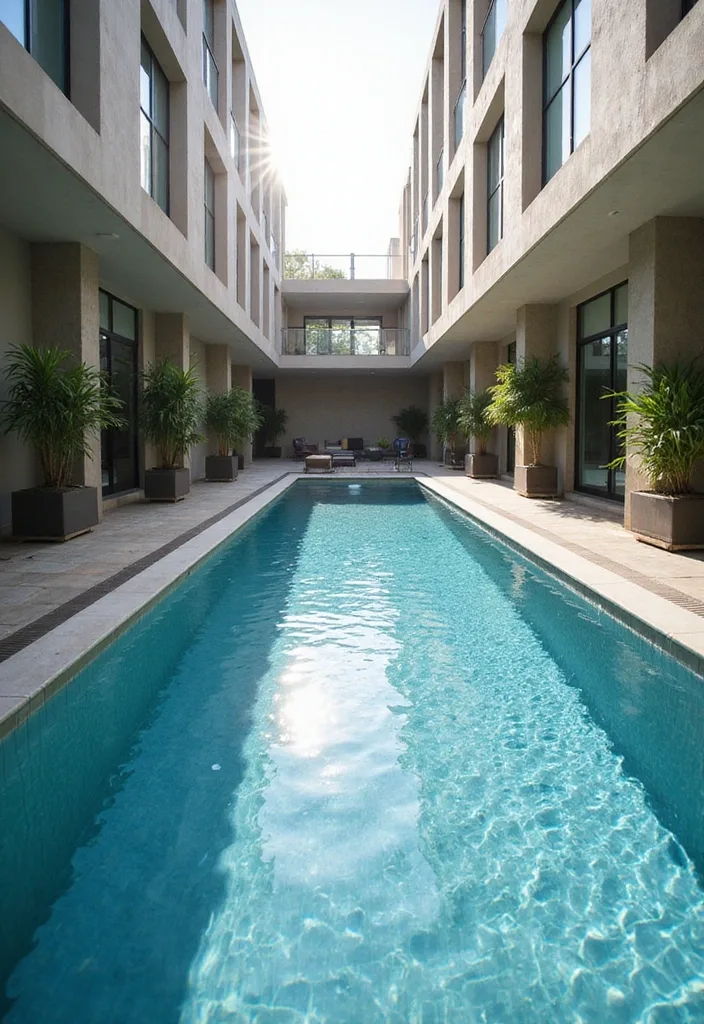
Lap pools are my default recommendation for homeowners who truly swim and do not just float on weekends. A straight, uninterrupted lane changes everything about training rhythm and pacing.
For adults returning to fitness, a narrow 30 to 40 foot lane can be enough if depth and wall geometry are right. I tell clients to budget for current assistance or resistance tools only after they secure good basics: non-slip coping, reliable circulation, and glare control for morning sessions.
One detail people miss is wall clearance at each end. If turns feel cramped, sessions become frustrating quickly. Build in a bit more length than your minimum plan if the budget allows, because that extra space improves stroke quality for years.
This setup suits disciplined routines, smaller lots, and people who want their pool to serve health first. You can still make it beautiful, but function should lead every design decision.
27. Beach Entry Pools
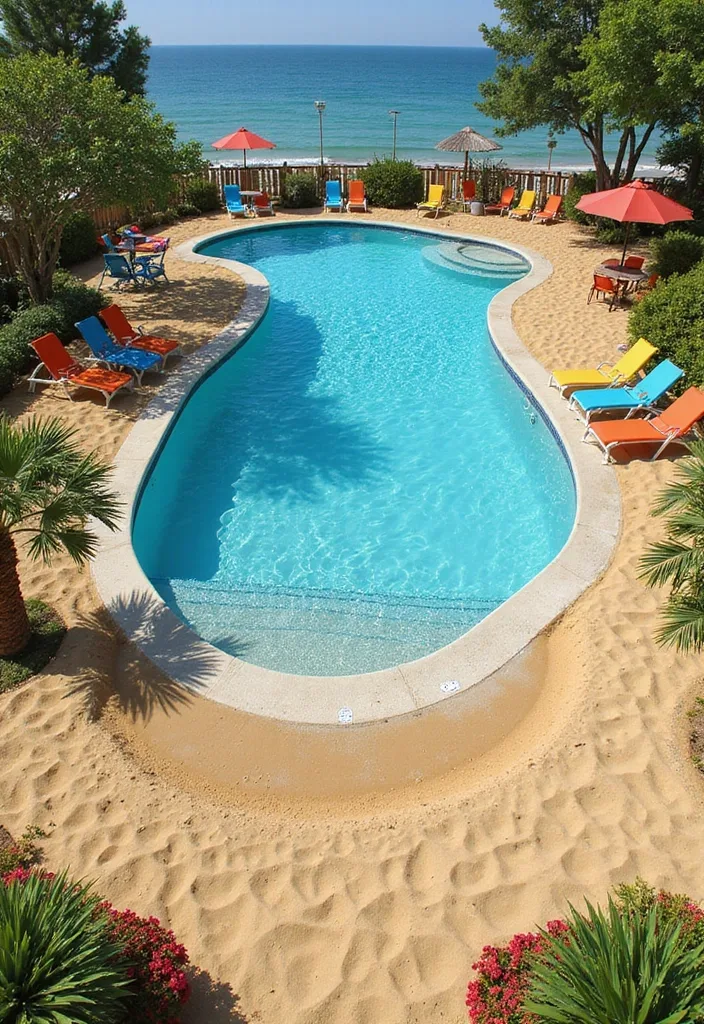
Beach entry pools are excellent for multigenerational homes because the gradual slope serves toddlers, grandparents, and everyone who prefers easy access over ladders or steep steps.
From a safety standpoint, I like this design when paired with clear depth markers and slip-resistant textures. It also creates a natural sun shelf where younger kids can play while adults stay close without standing in deep water.
This style is best for family-first backyards. If your household includes frequent guests with mixed mobility, a beach entry can make the whole space more inclusive with zero institutional feel.
28. Raised Stone-Clad Pools
A raised pool wall finished in stacked stone solves a problem sloped or small yards run into constantly: you get a full-depth pool without excavating the entire lot down to grade.
I point clients toward this option when they are dealing with a high water table or a yard that floods seasonally, since a raised structure sidesteps drainage issues an in-ground pool would fight for years.
The visual tradeoff is that the pool sits above the lawn line rather than blending into it. Artificial turf around the base, like here, at least keeps the transition low-maintenance.
29. Smart Pools
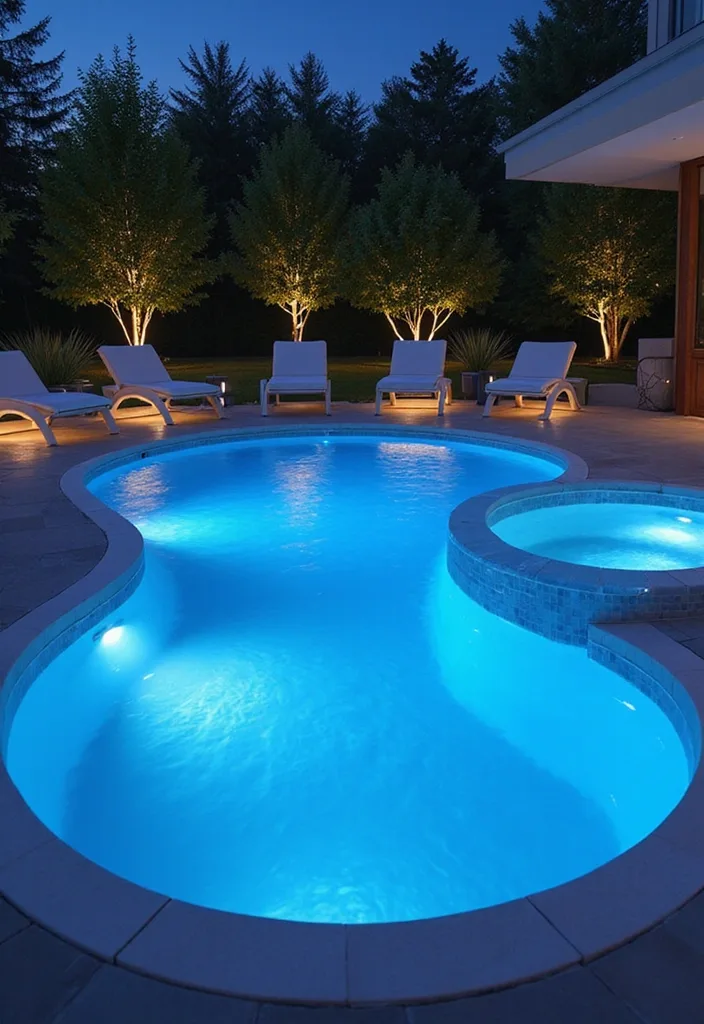
Smart pools make sense when you travel often or juggle a packed schedule. Remote control of temperature, filtration cycles, and lighting can keep water quality stable even when you are not home.
In training I have found that automation is valuable only if the underlying equipment is reliable and the app ecosystem is simple. Too many disconnected systems create confusion, especially when service calls are needed.
I suggest choosing one control platform and making sure your installer documents every setting in plain language. That sounds boring, but it saves hours when you need seasonal adjustments or a quick repair visit.
If you like data and convenience, this design is a strong fit. For more planning ideas, compare this approach with larger indoor pool concepts where climate and automation work together year-round.
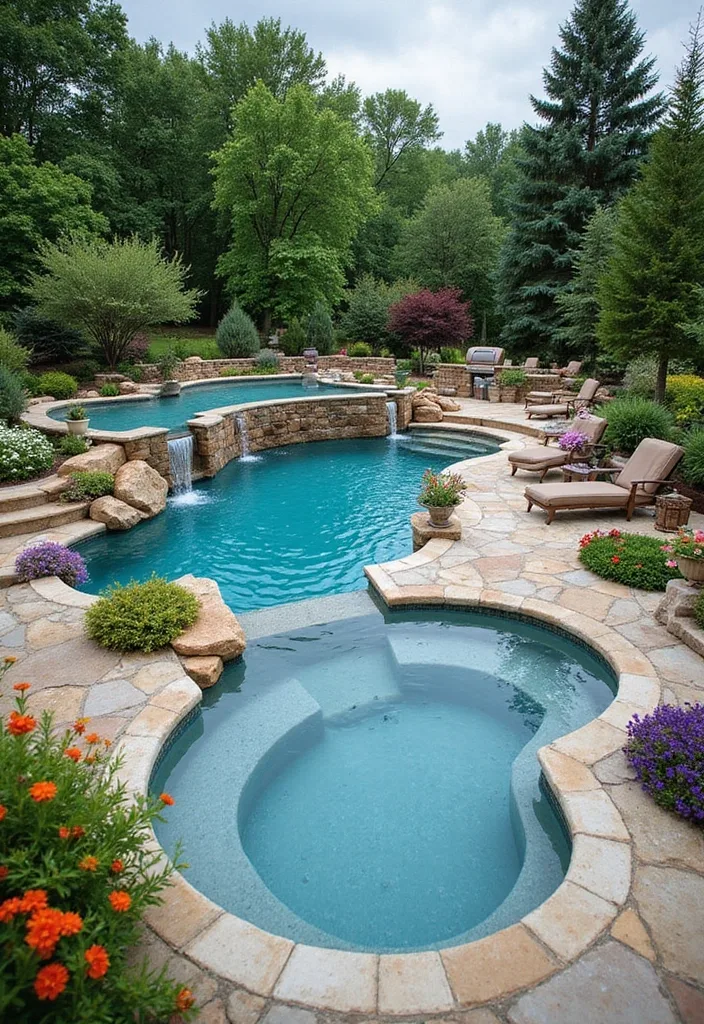
The right house pool design is less about copying a trend and more about matching your real routine, climate, and maintenance tolerance.
If you want a simple next step, shortlist two styles: one that matches your architecture and one that matches your lifestyle. Then pressure-test both against budget, service access, and how your family will use the yard in spring, summer, and shoulder seasons.
Before final sign-off, ask your contractor for a plain maintenance calendar and expected monthly operating costs. Those numbers tell you more about long-term satisfaction than renderings ever will.
I would rather see a well-planned mid-budget pool used four times a week than an expensive showpiece used four times a year. Build for your actual life, and the visual beauty follows.
Landscaping, Privacy & Smaller Footprints
These are the pins I save when the pool shell itself is only half the job. Privacy, planting, and scale decisions decide whether the space feels finished or just newly expensive.
Privacy Planting That Hides the Pool Without Boxing It In
Privacy landscaping around a house pool works best when it feels layered, not defensive. I like a setup like this because the planting screens sight lines without turning the deck into a tunnel, which matters if the pool is close to a neighbor or the street. From a design standpoint, tall grasses and looser shrubs usually age better than a solid hedge wall unless the whole property is already very formal.
Backyard Landscaping That Gives the Pool a Stronger Frame
The honest answer is that many pool projects look underwhelming because the landscaping budget gets treated like leftover money. This kind of composition shows why the edges matter so much, the path lines are clear, the greenery softens the hardscape, and the pool finally looks anchored. If I had to choose where to spend after the shell is done, I would fund the planting plan before I bought fancier loungers.
Backyard Pool Garden Layout That Feels Softer and More Usable
I like garden-led pool layouts when the house already has enough architectural presence and does not need the pool to shout. The planting here turns the water into part of a wider outdoor room, which is usually the better move for family backyards that need to feel inviting every day, not just dramatic in listing photos. Too much bare paving makes a pool area hotter and flatter than people expect.
Compact Backyard Pool Composition with Clean Focal Points
What works here is control. The eye knows exactly where to go, the pool reads clearly, and nothing around it is fighting for attention with a dozen tiny features. In training I have found that people often over-design compact spaces out of fear they look too plain, when the better answer is usually one strong waterline, one clear path, and a calmer material palette.
Entertaining, Bars & Pool-House Support Spaces
A house pool earns its keep faster when the support spaces are right. These next examples matter if the pool is supposed to host people, not just sit there looking expensive.
Pool Pavilion with Outdoor Kitchen and Shade Coverage
This is the sort of pool pavilion I recommend when people know they will feed guests outside more often than they will actually swim laps. A covered cooking or serving zone changes the whole traffic pattern around the water and keeps wet feet out of the main house, which is a bigger quality-of-life win than most first-time pool owners expect. The key is making the pavilion big enough for real use, not just decorative shade.
Ranch House Pool House That Matches the Main Home
Pool houses work best when they look like they belong to the property instead of arriving from a different project. I like this ranch-style example because the support building mirrors the scale and roof logic of the home, which immediately makes the whole pool zone feel more settled. If storage, changing space, or a guest bathroom are part of the brief, this is the kind of matching architecture worth copying.
Pool Renovation Layout with a Bar and Better Gathering Space
A pool bar sounds frivolous until you have a backyard where every drink run sends wet traffic through the kitchen. This kind of renovation works because it fixes the entertaining pattern and gives adults a place to stay connected to the pool without camping in deck chairs all afternoon. I would only add a bar if the seating and drainage are solved first, otherwise it turns into clutter with a countertop.
Covered Terrace Overlooking the Water for Long Evenings Outside
This is the kind of covered terrace that makes a house pool more usable in real life, not just prettier on paper. The roof structure gives shade, a little weather protection, and a place where people can stay near the water after sunset without feeling exposed. For entertaining households, I would prioritize this sort of comfortable overlook long before I added a complicated fire feature.
Statement Backyards, Water Features & Villa Scale
Some house pool ideas are less about squeezing function into a tight lot and more about giving a larger property a clear focal point. These are the ones I would study for drama, proportion, and long-view impact.
Disappearing-Edge Pool with Waterfall and Wood Decking
Infinity edges and waterfall walls only look effortless when the engineering is handled early and the view is good enough to justify the cost. I like this example because the edge, deck, and landscaping are working together instead of competing for attention, which keeps the water feature from feeling gimmicky. If the lot already has a slope or outlook, this is one of the few luxury moves that can genuinely be worth the budget.
Spanish Villa Pool Layout with Strong Sight Lines
This is a smart reference for anyone working with a larger house where the pool has to hold its own against the architecture. The long lines, open deck, and clean relationship between building and water make the pool feel intentional from a distance, which is critical on bigger properties. I usually tell people that a villa-scale pool needs proportion before accessories, and this pin proves the point.
Pretty Compact Pool That Still Feels Special
Not every house pool needs to be huge to land well. This one works because the proportions are tight, the visual noise stays low, and the small footprint still feels like a destination instead of a compromise. For homes without mansion-scale land, I would rather build this well than stretch the budget across a bigger shell that leaves the rest of the yard unresolved.
Mansion-Scale Backyard Pool with Clear Visual Hierarchy
At this scale, the main mistake is letting every feature ask for equal attention. What I like here is that the pool still reads as the center of the composition, while the house, paving, and planting all support it instead of fighting it. On a large property, that hierarchy matters, or the whole backyard ends up feeling expensive but strangely unfocused.
FAQ
What are the benefits of having a pool at home?
A home pool gives you easy access to low-impact exercise, family time, and stress relief without leaving the property. It can also improve resale appeal when the design matches the house and local climate.
How much does it cost to build a house pool?
Most in-ground pools land between $35,000 and $90,000 depending on size, structure, finishes, and site work. Extras like automation, spas, and premium decking can move the total much higher.
How do I maintain a pool in my backyard?
Keep a consistent weekly routine: test water chemistry, brush surfaces, empty baskets, and run filtration long enough for full turnover. Monthly equipment checks and seasonal tune-ups prevent expensive repairs.
Are indoor or glass-enclosed pools worth the extra cost?
They are worth it if you actually want to swim outside of summer. Budget for dehumidification and ventilation from the start, since that is the line item people underestimate most, not the glass itself.
What is the best house pool style for a small backyard?
Narrow lap-style pools, raised stone-clad pools, and small courtyard pools with a single tree or pergola work best on compact lots. Depth matters more than length once the yard is tight.