
I have cleaned my share of above ground pools, and the honest part is the work is mostly rhythm, not a single miracle product. I wrote this to match how I actually move through a week: small passes that keep debris from reaching the filter, chemistry that I test on purpose, and tools I can hold when my hands are already wet. When I need the money side in one place, I keep a separate breakdown on how much it costs to maintain a swimming pool so the chemical bill does not feel mysterious next to the electric one.
How to Clean Above Ground Swimming Pool? Getting Started
Preparation for Pool Cleaning
Before I touch a wall brush, I look at the water the way I look at a lane before practice: I want clarity, color, and any early haze. I note leaves on the bottom versus floating pollen, because the fix is different. I remove the cover like I mean it, one fold at a time, so I do not dump last week’s dust straight into the shallow end. I also want the water high enough for the skimmer to pull, not gulp air, because a dry basket wastes a trip outside.
Here is the prep list I actually run, not a fantasy checklist on a spreadsheet:
- I fold the cover, dry the folds when I can, and store it off the ground so I am not growing mildew in the creases I touch next weekend.
- I skim first pass for anything that still floats, because the longer organics sit, the more they stain and the more the filter clogs later.
- If the level is low, I add water before I add chemistry, and I re-test after a top-off because the numbers shift. This pairs with what I do on how much salt to add to a pool when I need to nudge salinity in a salt system without guessing from memory.
I set a day each week I can keep, not a perfect hour I will miss. Consistency is what keeps an above ground pool from feeling like a second job, and it keeps the surface from turning into a science experiment while I do something else. When the season is heavy with swimmers, I move that day up; when rain dilutes, I re-test before I trust yesterday’s read.
Essential Tools for the Job
I do not need a garage of gadgets. I need tools that feel safe in my hands when they are wet and a filter I understand well enough to service without panic. The brush needs stiffness matched to my liner or steel walls, the vacuum head needs to keep contact on the bottom without flapping, and the hose has to be long enough that I do not yank a fitting loose.
What I keep within reach:
- A pool brush I replace when the bristles splay, because a worn brush is just drama without progress.
- A pool vacuum I can run manually on slow days, or a cleaner that actually matches the hose diameter the builder specified.
- A garden hose with a backflow plan I trust, because I will not add city water in a way that risks my home lines. If I work with a salt system, I cross-check maintenance habits with our guide to how to maintain a saltwater pool so the cell and the brush schedule stay aligned.
- A pool pump and pool filter I can read: pressure, priming, and a clean pot basket I empty before I blame chemistry for cloudy water.
Quick point: I run the multiport valve the way the label shows, and I re-seat orings when I service the filter, because a slow air leak is still a leak. If my gauge acts jumpy, I check the return eye, not only the water line. When chemistry keeps drifting high on alkalinity, I walk through the same levers I wrote about in how to reduce alkalinity in a pool before I pour random acid from memory.
Step-By-Step Cleaning Process

Removing Debris and Skimming
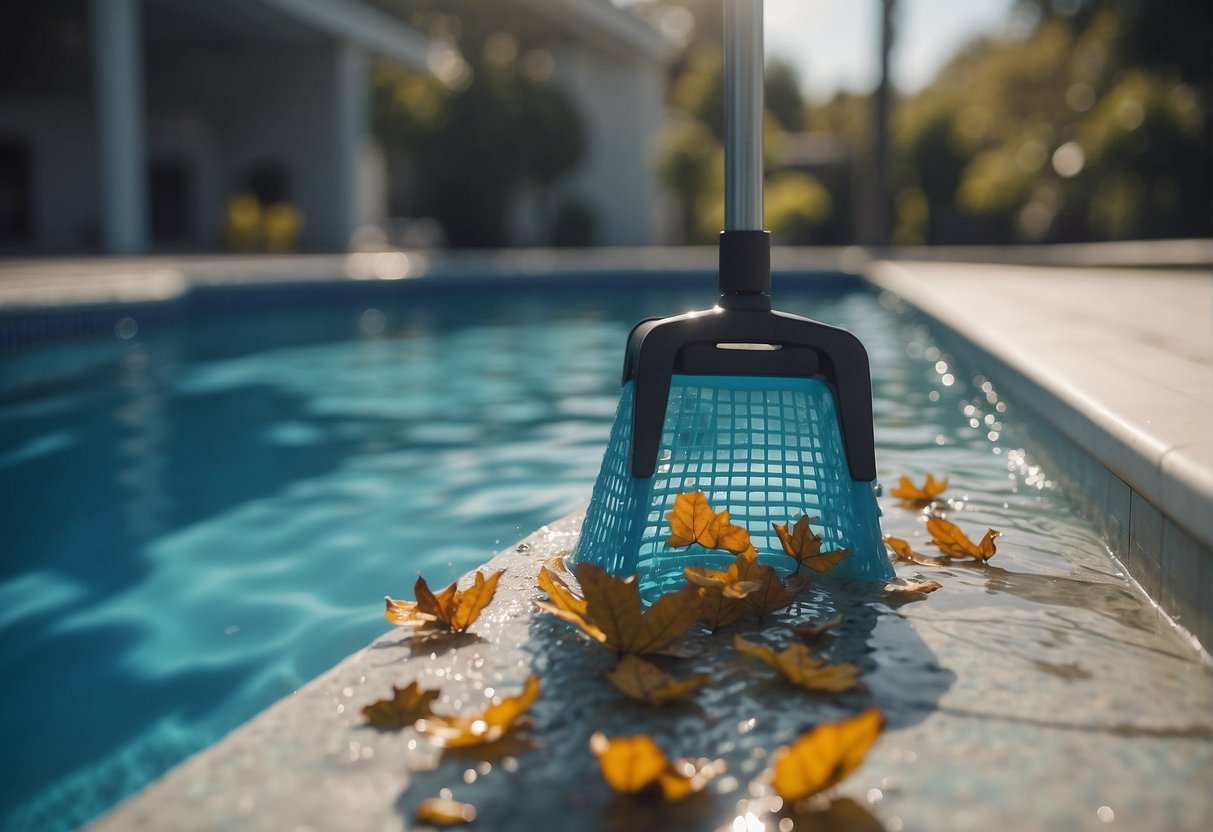
I start with a net that fits my hand and a reach pole that is not wobbling at full extension, because a dropped pole teaches humility fast. I skim in calm arcs, not frantic chops, and I work from the return side toward the skimmer if I can so I help circulation instead of fighting it. I treat skimming as a short daily habit on windy weeks, and I forgive myself the days I miss, then make up time before the bottom turns into mulch. When pollen coats the line, I brush the waterline after I net the heavy stuff, because chemistry sticks to film.
Vacuuming and Brushing
I prime the vacuum line until the hose runs full, then I connect with the pump on the setting my manual says for waste or filter, not the one I wish were faster. I move the head slow enough to let debris lift, because speeding looks productive but it stirs fine silt. For walls, I brush in overlapping half circles, top down, and I pay extra attention to the ladder and seams where algae like to start as a smudge, not a headline.
If I have an automatic cleaner, I still brush weekly when the pool is open heavy. Robots and suction cleaners help, but they do not replace a brush at the line where people touch and sunscreen collects. I reset the head on the pool floor when I am done, and I coil the hose so the next me does not fight knots.
Filter Maintenance and Backwashing
I read the filter gauge at rest and after I clean, so I have a real baseline, not a guess I carried over from last season. When pressure climbs into the window that means dirty media, I backwash a sand or DE setup the long way, pause, then rinse, because rushing the valve strip invites channeling. If I have cartridges, I hose between pleats, soak when the manufacturer says it is time, and replace when the plastic frame cracks, not when I am tired of the bill. I empty the hair and lint pot before I act confused about flow, because that tiny basket is often the real villain.
Maintaining Water Quality and Pool Health

Balancing Chemical Levels
Chlorine levels: I want free chlorine in the range my kit lists for the kind of system I run, and I test after heavy swim nights and storms. If I add shock, I do it in the evening when sun will not burn it off the moment it lands, and I read the label for whether I can swim the next morning. I do not play the hero guess with buckets; I measure.
- Shock treatment: I use shock to reset after parties, long rain, or a visible haze, and I add it while the pump runs so the floor does not sit in concentrated pockets. I walk the edge while it disperses, because even distribution beats a clean spot and a green corner.
pH levels: I target the band my test kit and plaster or liner need, and I move pH in small steps with retests, because a wild swing is worse than a slow correction. I buy adjusters for what I have, not what a random forum thread assumes about my water.
- Daily pH check when busy: I test pH the same time of day I can repeat, and I log it on my phone so the trend is clear. If the kids swim daily, I test more, not less.
Water balance beyond two numbers: I watch total alkalinity, calcium, and stabilizer, because they shape how pH and chlorine behave together. I think of it like stroke mechanics: the kick sets up the catch; ignore the foundation and the rest fights you.
- Alkalinity: I use the band the kit prints, and I add buffer or acid in the order the book says, not the order I feel like in the heat.
- Calcium hardness: I test before I blame metals for etching or scale, and I match fill water to the pool world I built.
- Stabilizer (CYA): I keep it in the range that matches outdoor sun here, and I stop stacking stabilized products without noticing, because high CYA is a quiet thief of free chlorine. If I have to reset after a bad guess, I lean on a controlled drain and refill plan instead of a chemistry trick I cannot explain later.
Regular Maintenance and Health Check
Filter run time: I set pump hours for clear water, not for the lowest electric bill, and I split runs across the day in heat so chemicals stay mixed. I listen for a pump that sounds like gravel; that is maintenance, not a volume knob.
Skim and quick vac rhythm: I skim on high debris days, and I vacuum the floor on the slot I can keep even when the weekend gets loud. I would rather 15 real minutes than a two-hour project after I pretended the leaves would disappear.
Brushing: I brush the walls where hands leave sunscreen and the steps where people step with grass clippings. I do not need perfect tile lines; I need nothing growing where the brush can reach. When the surface looks dull, I check chemistry before I add another product with a long name.
Sanitizers and honesty: I pick the sanitizer path I can run consistently, and I do not mix storylines. If the pool is full of kids, I test more often, post faster after storms, and I do not let clear water lull me into skipping the numbers. I keep an eye on how long to wait after shock, because safety is part of the maintenance stack: see how long to swim after shock for the way I time it when we host late swims.
FAQ:
What is the best way to clean an above ground pool?
I start with a calm surface skim, then slow vacuum passes on the floor, a wall brush to knock biofilm, and a filter I actually backwash or rinse when the gauge says so. I test chemistry the same day, because pretty water and balanced numbers travel together. If I have to pick one thing I never skip, it is the filter cycle after I disturb dirt.
How to clean an above ground pool that has been sitting for months?
I would net out anything floating, then brush before I vacuum, because settled dust is easier to move in one pass. I drain part of the water if the chemistry is a mess, refill to get fresh dilution, and run the filter for long stretches with clean media. I shock only after I know volume and baseline pH, and I keep a log so I can see the trend, not a single snapshot.
What to use to clean an above ground pool liner?
I use a soft brush with rounded bristles, no steel on vinyl, and a liner-safe cleaner the manufacturer signs off on. I test a tiny patch in a low corner, wait, then expand. I avoid household abrasives; they can dull the print or weaken seams where I do not want a surprise.
How do I get dirty water out of my above ground pool?
I take water out with a submersible pump on a long cord, or a siphon if the grade cooperates, and I point discharge where it will not undercut the pad. I never drain below what the manual allows for my liner, and I check local rules before I dump to the street.