
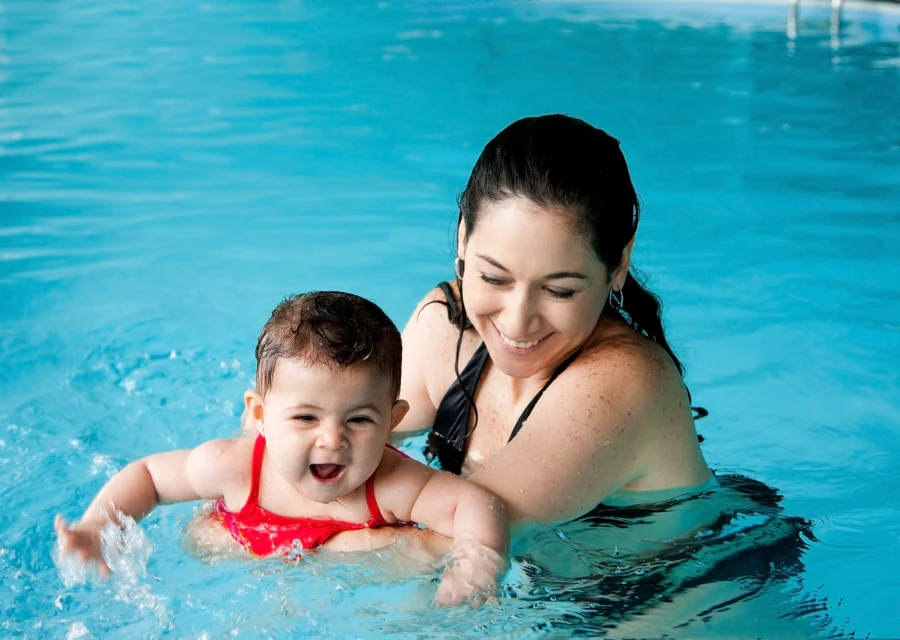
Most parents see swimming lessons as a vital safety measure and they are. But what many don’t realize: the water does more than protect your child, especially through early swim lessons for kids, it becomes a powerful catalyst for learning, growth and confidence.
Across countless conversations with swim instructors, educators and families, one pattern emerges clearly to me: Children who start swimming early often pick up new skills faster, communicate more confidently and develop stronger motor coordination than children without regular water experiences.
Swimming is a full‑body learning experience that engages the brain, senses and emotions all at once. In the water, kids practice movement, breathing patterns, spatial awareness, rhythm and coordination while having fun. It’s no wonder parents keep coming back amazed by the unexpected side effects.
Let’s explore why early swim lessons boost development and which small at‑home activities can support your child even between lessons.
1. Early Swim Lessons for Kids: a multi-sensory workout for the brain
Between birth and age 6, a child’s brain is building neural connections at an incredible pace. Activities that combine multiple stimuli simultaneously fuel this development best and few activities do this better than swimming.
Why water works so well? In the water, children experience a combination of freedom and resistance they simply can’t find on land.
- Buoyancy lets them move without fear of falling
- Resistance challenges their muscles and supports motor planning
- Water pressure and temperature stimulate the sensory system
- Whole‑body movement trains balance and coordination
This uniquely layered learning environment supports skills that are essential for school and daily life: focus, listening, language clarity, body control and even early reading readiness.
A long‑time swim coach summarized it perfectly in just one sentence:
“Kids learn faster in the water because their brains and bodies have to work together in harmony but they only feel the fun.”
2. Rhythmic breathing = improved focus and calmer emotions
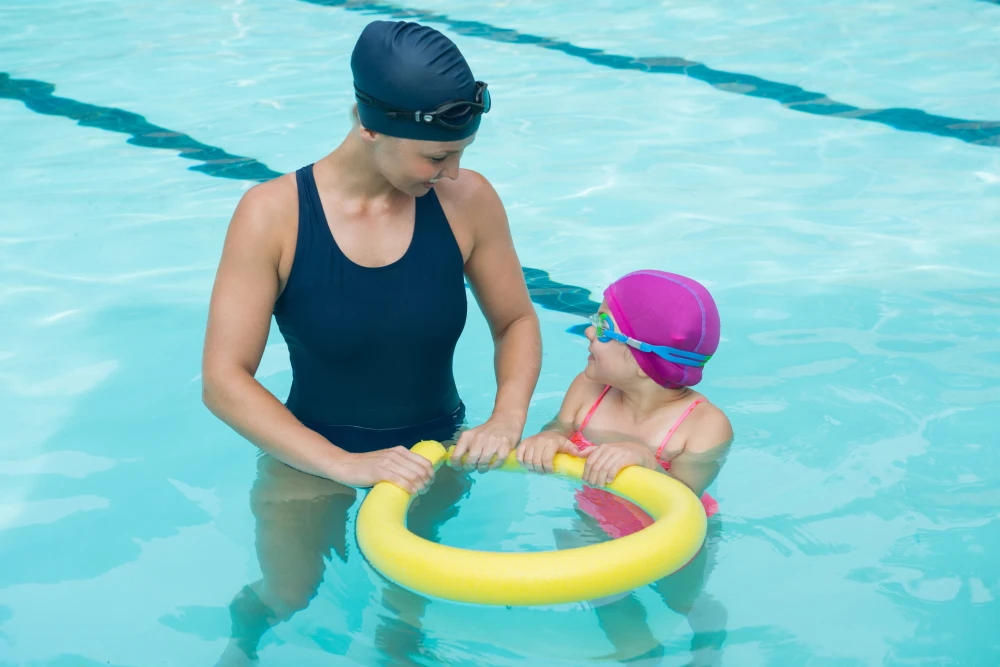
Breath control is one of the first skills children practice in swim classes. And this simple act carries incredible benefits:
Structured breathing in swimming teaches:
- mindful inhaling and exhaling
- pauses and timing
- self‑regulation through rhythm
This core principle is introduced early in Early Swim Lessons for Kids and becomes a lifelong regulator. The patterns mirror proven mindfulness and therapeutic techniques used by child psychologists to help calm young children and expand their attention span.
Parents frequently notice that swimming helps improve:
- staying focused longer on tasks
- managing frustration
- listening more closely to instructions
- reacting less impulsively
- calming down more quickly when overwhelmed
One mom shared her turning point like this:
“Before, every small challenge felt overwhelming for my daughter. But once she learned breathing through swimming, she finally found a way to slow down. It transformed her focus and our everyday life too.”
If you’re looking for an activity that combines mindfulness and movement, early swim lessons for kids are a proven start.
3. Motor skills grow faster when the water slows things down
Swimming requires using arms, legs and breathing in a coordinated, intentional way. Because water naturally slows down movement, kids learn to control their bodies more carefully and plan movements more consciously.
This supports big developmental leaps in:
- core strength and posture
- left‑right body coordination (bilateral movement)
- balance and stability
- shoulder and arm control (important for handwriting!)
- movement planning and timing
Many parents report almost identical “playground moments” after a few weeks of lessons:
“My son started walking more steadily, playing more confidently and even climbing differently. He seemed like a tiny engineer who suddenly recalibrated his internal motion sensors.”
4. Growth moments that surprise parents most
Here are a few examples parents often don’t expect when they enroll their kids in swimming lessons:
- clearer speech due to strengthened oral muscles and breathing control
- better direction‑following thanks to practicing cues in a structured session
- improved social confidence once a new skill starts to click
- more patience by learning to wait and take turns
- stronger body control which boosts handwriting and fine motor tasks
- growing independence by practicing a fresh challenge away from home
Swimming lessons support the whole child, not just their ability to paddle through a pool.
5. Instructors see the small steps that lead to big skills
Swim instructors witness your child navigating tiny milestones that are deeply connected to learning:
- processing multiple steps in a task
- responding to cues and timing signals
- practicing repetition without boredom
- learning communication through movement and rhythm
- overcoming hesitation through playful structure
Early swim lessons subtly build learning muscles that extend far beyond swim skills.
6. Easy at‑home games that boost both swimming and learning
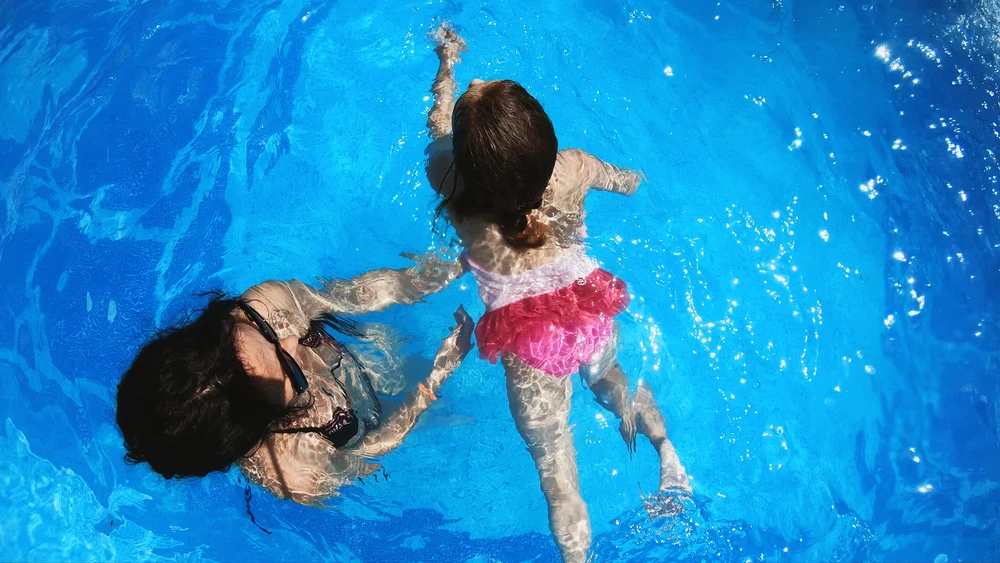
You don’t need a pool to support your child between lessons. Try these “waterless swim games” to nurture the same brain benefits:
1. Bubble Blowing Fun
Let your child blow bubbles through a straw into water.
Improves breath control and strengthens speech muscles.
2. Starfish Power Pose
Have your child lie on their back and stretch arms + legs out wide.
Boosts confidence for back‑floating and spatial awareness.
3. Opposite Hand‑Leg Crawl Game
Crawl with opposite arm + opposite leg.
Supports bilateral brain pathways and coordination.
4. Bathtub Kick Rhythm
Sit on the edge of the tub and kick feet slowly up and down.
Trains leg timing and movement imitation.
5. “Copy My Move” Session
Slow big movements reach, push, pull, stretch then let your child copy you.
Perfect for planning motor movements and strengthening listening.
These activities map directly onto the skills kids practice in the water while simultaneously supporting cognitive growth.
These exercises complement the skills children learn during swim lessons for kids and prepare them for faster progress.
7. The real power formula: what swimming brings together
Swimming blends, like Early Swim Lessons for Kids demonstrate perfectly:
- multi‑sensory stimulation
- rhythmic breath control
- intentional full‑body movement
- muscle strengthening + balance
- repetition + play + cues
- confidence through mastering a challenge
This is why it helps young children:
- learn faster
- focus longer
- speak clearer
- move more confidently
- handle emotions calmer
- follow instructions better
- grow more independent
Even major outlets like CNN have highlighted the surprising upside of early swim education, and this short clip shows, in an unpolished, real-pool setting, why the benefits reach far beyond basic water safety.
Final thought: Water shapes minds, not just movement
Water creates a space where kids unlock cognitive and physical potential playfully, intuitively and holistically. If you’re considering baby swimming classes or first lessons for toddlers take that first splash. The benefits ripple into communication, coordination, calmness and curiosity all long after the lesson ends. Swimming helps kids grow mentally, physically and emotionally quietly making it one of the most complete learning environments for early childhood.
Frequently Asked Questions
When should my child start swim lessons?
Most swim programs begin offering lessons as early as 6 months old. At this age, the focus is on water comfort, breath awareness, floating basics, and parent-guided movement. Toddlers (2–4 years) are ready for more structure, direction-based exercises and early technique building. The key rule: start when your child is curious, not when the internet tells you so.
How often should kids take swim lessons for real progress?
Once per week builds familiarity. Twice per week builds skill. Three times per week builds transformation. Kids learn by repetition, rhythm, and routine. Short, frequent lessons beat long, irregular ones every single time. If you can make swimming a consistent part of life early, progress becomes almost automatic.
Do swim lessons really improve learning and behavior outside the pool?
Yes and the changes often appear in subtle waves. Parents and instructors report improvements in focus, self-regulation, motor planning, speech clarity and confidence. Water-based learning trains patience through breath cycles, direction-following through cues, coordination through bilateral motion and confidence through mastering a challenge.
* Images Credit: Provided by Nemo Swim School, used with permission.