
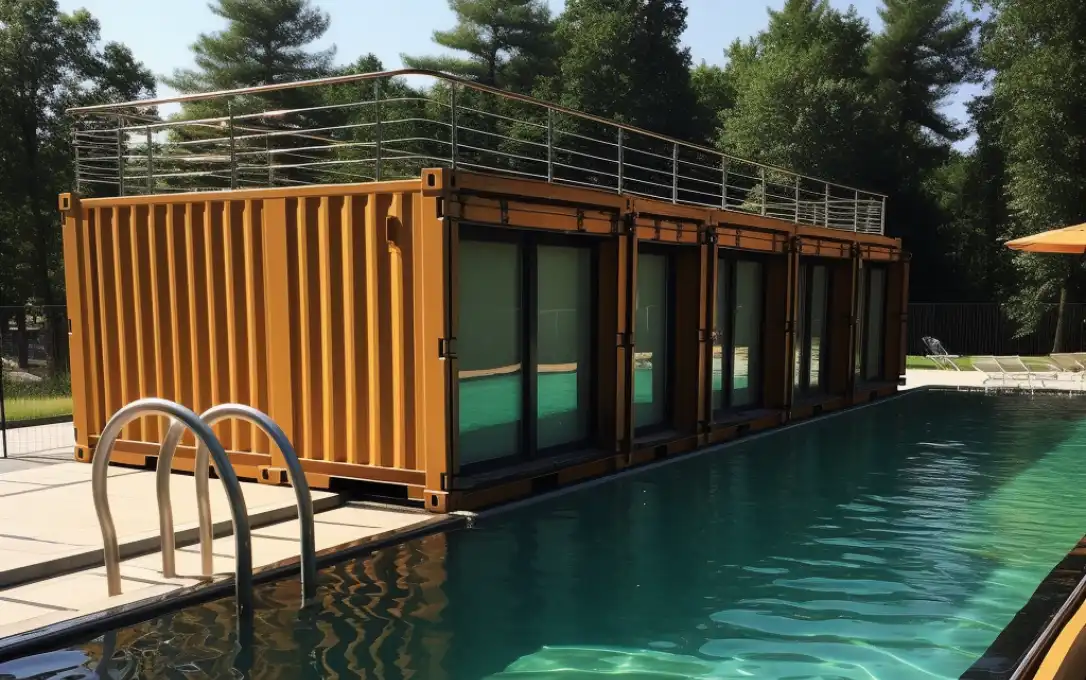
The honest answer is that container swimming pools can be a smart small-yard solution, but they are not the cheap shortcut people imagine at first glance. I like them when the owner wants a narrow footprint, a modern look, and a faster install path than a fully custom concrete build. I get much more cautious when someone expects unlimited design freedom or assumes the final price will stay close to the shell cost.

When I look at container pools from a decision-making standpoint, three things matter most: site access, total installed cost, and whether you actually like the long rectangular form. If those three line up, a container pool can feel sharp, efficient, and surprisingly high-end in a compact backyard. If one of them is off, the project usually starts looking better on Pinterest than it does on the estimate.
Quick Answer: Are Container Swimming Pools Worth It?
- Usually yes, if you want a modern pool for a tight yard, you like clean lines, and you value faster installation.
- Usually no, if you want curves, a deep custom shape, or the lowest possible installed price.
- The biggest mistake is budgeting around the container itself instead of the real project cost, which includes delivery, crane placement, site prep, utilities, permits, fencing, and finish work.
Why Container Pools Appeal to Small-Space Homeowners
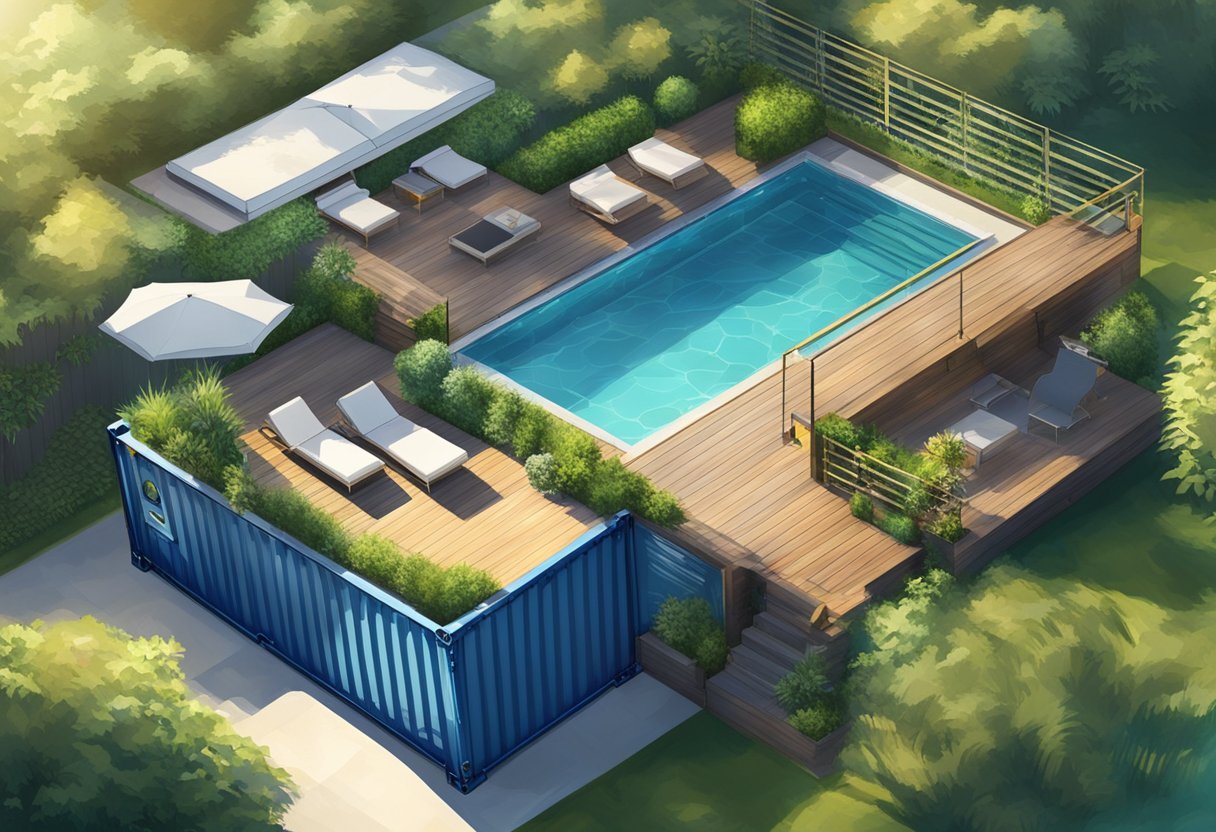
I understand the appeal immediately when the yard is awkward, narrow, or boxed in by hardscaping. The long form does not waste much visual space, and the geometry already feels finished before you add much around it. In backyards where a traditional pool would need a lot of shaping, excavation, and design compromise, a container pool can arrive with a stronger identity from day one.
I also think people are drawn to the predictability. A container shell gives you a starting structure that feels easier to imagine than a fully custom build. That does not mean the entire project is simple, but it does mean the size, form, and general look are easier to price and plan early. If you are comparing options for a tight yard, I would also look at plunge pool ideas and small backyard pool ideas on a budget before you commit.
The strengths that matter most
- Narrow footprint: A 20-foot or 40-foot container can fit spaces that feel too constrained for a conventional shape.
- Fast visual impact: Even simple finishes can make the project look intentional instead of improvised.
- Clear style direction: If you like modern, industrial, black, timber-clad, or minimalist outdoor design, the form already works in your favor.
- Flexible installation style: Above-ground, partially in-ground, and fully in-ground versions each create a different look and cost profile.
The Tradeoffs People Underestimate
The first surprise is that container pools are not automatically cheap. The shell can look affordable in isolation, but the installed project often lands much higher once you price the practical parts that nobody pins to a mood board. Delivery access, crane rental, electrical work, plumbing, foundation prep, drainage, fencing, and decking can move the number fast.
The second surprise is thermal behavior. Steel is tough, but it is not naturally good at holding comfortable water temperature. If the builder does not handle insulation well, the pool can lose heat faster than owners expect. In hotter climates that may be manageable. In cooler shoulder seasons, it changes the day-to-day experience and the heating bill.
The third surprise is design limitation. I actually like the honesty of the rectangular form, but it is still a limitation. If you want soft curves, beach entry, tanning shelf complexity, or a shape that wraps around other backyard features, a container pool stops being the obvious answer.
My practical caution list
- Make sure the delivery path and crane setup are realistic before you fall in love with the idea.
- Ask what reinforcement is required if the pool will be partially or fully buried.
- Do not assume rust prevention is a one-time concern just because the finish looks polished at handoff.
- Budget for the area around the pool, because a great shell still looks unfinished without good decking, privacy, and circulation space.
What a Container Pool Really Costs
The most useful way to think about cost is not shell price but installed price. In the market I keep seeing, a simpler above-ground project may stay closer to the lower end, while a polished partially in-ground build with decking and utilities quickly climbs into the same conversation as other premium compact pools. That is why I would never buy one based on the shell alone.
- Budget-leaning project: Basic above-ground setup, restrained finishes, easier access.
- Mid-range realistic project: Better cladding, decent deck work, standard utilities, cleaner landscaping.
- High-end design project: Premium finishes, glass panel or custom details, strong hardscaping, heating, lighting, and polished outdoor integration.
If price is your biggest question, I would compare this route with budget-friendly pool builds and also think hard about whether an above-ground or plunge-style solution would satisfy the same goal with less structural work. A container pool can be worth the price, but only when you want the exact combination of shape, speed, and style it offers.
Best Use Cases for Container Swimming Pools

I like container pools most in compact backyards where every foot has to justify itself. They also make sense for guesthouses, second homes, and design-led rental properties where the pool needs to look memorable without taking over the entire outdoor plan. In those cases, the rectangular footprint feels efficient rather than restrictive.
They are also a strong fit for homeowners who want a plunge-pool lifestyle more than a traditional family-swim layout. If your real goal is cooling off, relaxing, taking a short dip, and creating a more finished backyard, a container pool can do that very well. If your goal is broad social swimming space with lots of movement around the perimeter, I think the format starts showing its limits sooner.
When Another Pool Type Makes More Sense
I would lean away from a container pool if you care more about shape freedom than installation speed. A fiberglass plunge pool can be a cleaner answer for some homeowners. A traditional in-ground pool still wins when you want full customization. And if the budget is tight enough that every utility and finish upgrade hurts, an above-ground concept or a simpler backyard water feature may be the more honest path.
For style research, I would compare the look against above-ground pool ideas, black swimming pools, and glass swimming pool designs. That comparison usually makes the right direction much clearer.
My Verdict
I would absolutely consider a container pool for the right yard, but I would only do it after pressure-testing the boring details first. The shape works. The small-space logic works. The modern look can be excellent. The honest answer is that the concept shines when you want a compact statement piece and already accept that the installed project will need real planning and a real budget. If you want the cheapest path or the most flexible design canvas, this is probably not it.
Frequently Asked Questions
Are container swimming pools cheaper than traditional in-ground pools?
Sometimes, but not always. The shell can look affordable at first, yet delivery, crane access, site prep, utilities, permits, and finish work often push the installed price much higher than people expect.
Do container pools work well in small backyards?
Yes, that is one of their strongest use cases. The long rectangular footprint fits narrow yards well and can create a clean modern layout without wasting much visual space.
Can a container pool be installed in the ground?
Yes, but buried or partially buried installations usually require more structural planning, waterproofing, and site work than above-ground versions.
What is the biggest downside of a container pool?
In most cases it is the gap between shell price and true installed cost. Owners also need to think carefully about insulation, rust management, and whether they genuinely want a fixed rectangular form.
Are container pools good for everyday family swimming?
They can be, but they are often better for compact recreation, cooling off, and design-led backyards than for buyers who want a broad custom family pool with lots of shape flexibility.