
When people search pools backyard inground, they usually want the shell decision, not another pillow roundup. Inground means the water is built into the yard: shape, depth changes, edges, and built-in features that you cannot fake with decor later. That is the lane for this list.
I sorted these by form and layout moves. Plant-first softscape lives in our garden pool post. Paths and grade live in backyard pool landscaping. Here I am staring at the water body itself.
21 Inground Pool Forms
1. Infinity Edge Line
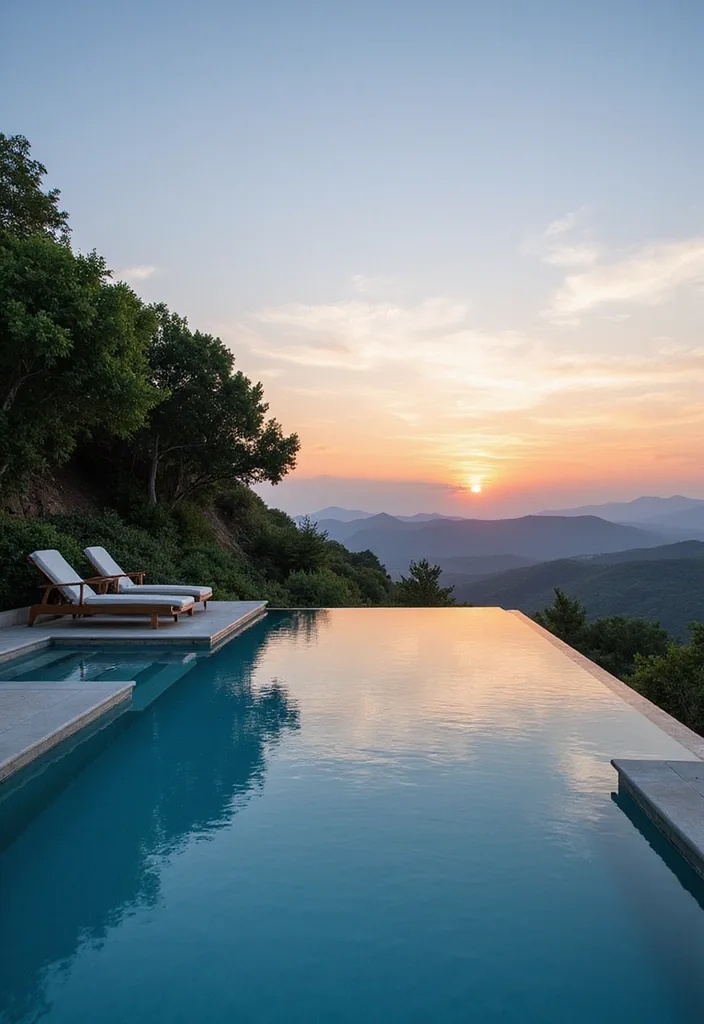
An infinity edge is a layout flex, not just a photo trick. The vanishing side needs a catch basin and a view worth the engineering. I would only chase this if the site actually drops away. On flat lots, you are buying drama you cannot earn. The wide entry steps on the left keep the shell usable, not only scenic.
2. Lagoon Rock Shell
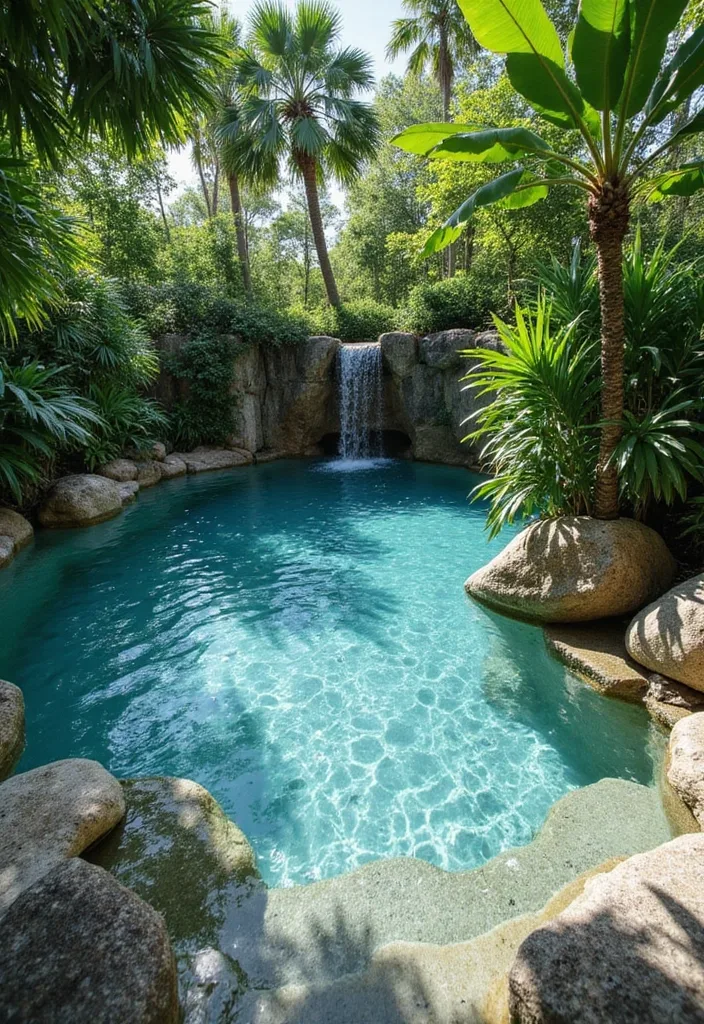
This shell refuses the rectangle on purpose. Boulders and a rock grotto waterfall make the form feel dug out of the landscape. Maintenance is the honest trade. Leaves, algae edges, and weird corners need more attention than a clean rectangle. If you want resort energy, budget the weekly work with the build.
3. Geometric Notch Plan
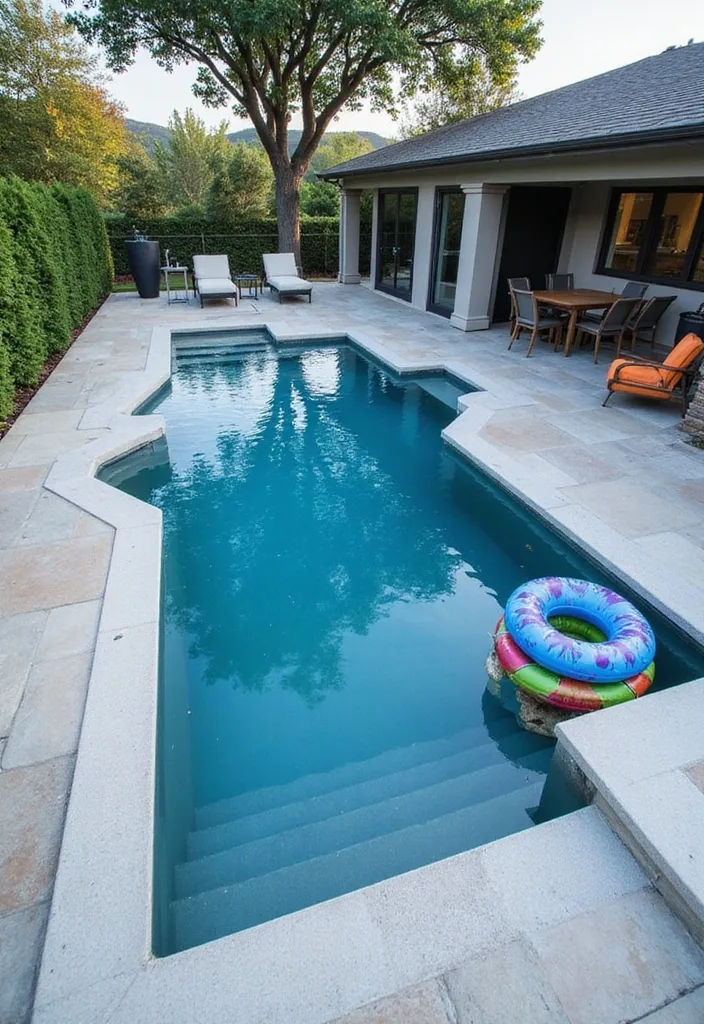
Notched sides turn a basic rectangle into architecture. Dark water finishes make those angles read sharper. I like this when the house is already modern and the patio grid is square. The built-in steps at the near end keep the geometry from feeling cold. Form first, float toys optional.
4. Farmhouse Rectangle
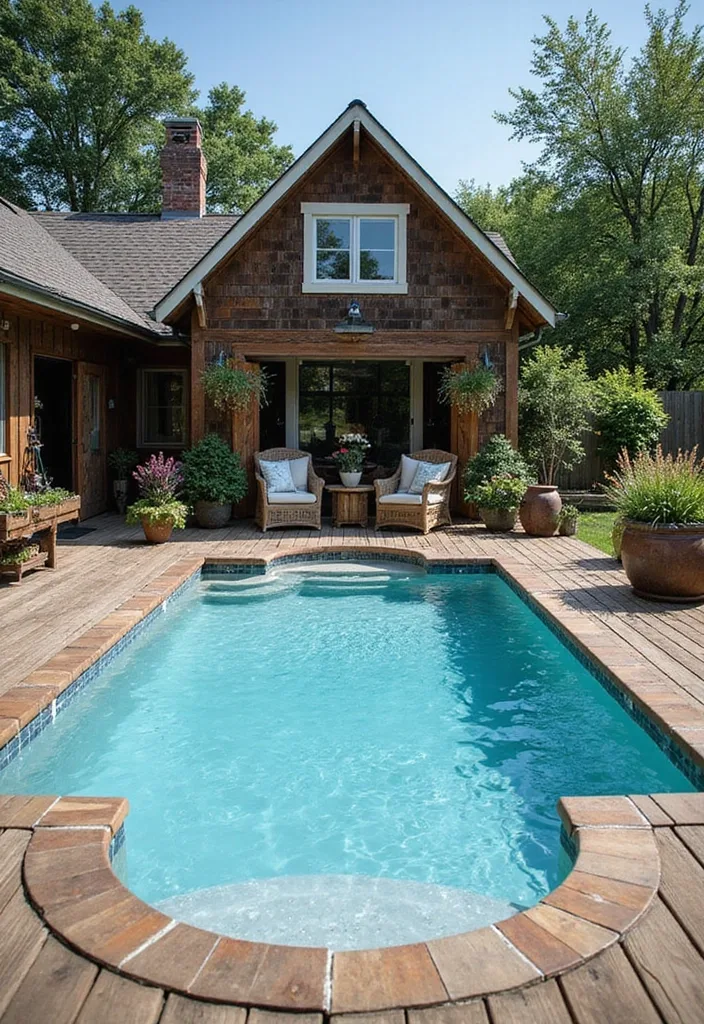
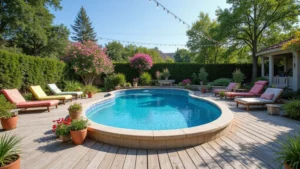
A straight rectangle with a curved step alcove is still one of the smartest backyard shells. You get clean swim potential plus a soft entry. Wood decking wraps it in farmhouse warmth without changing the pool type. I keep coming back to this plan when people want usable water more than a sculpture.
5. Mediterranean Freeform
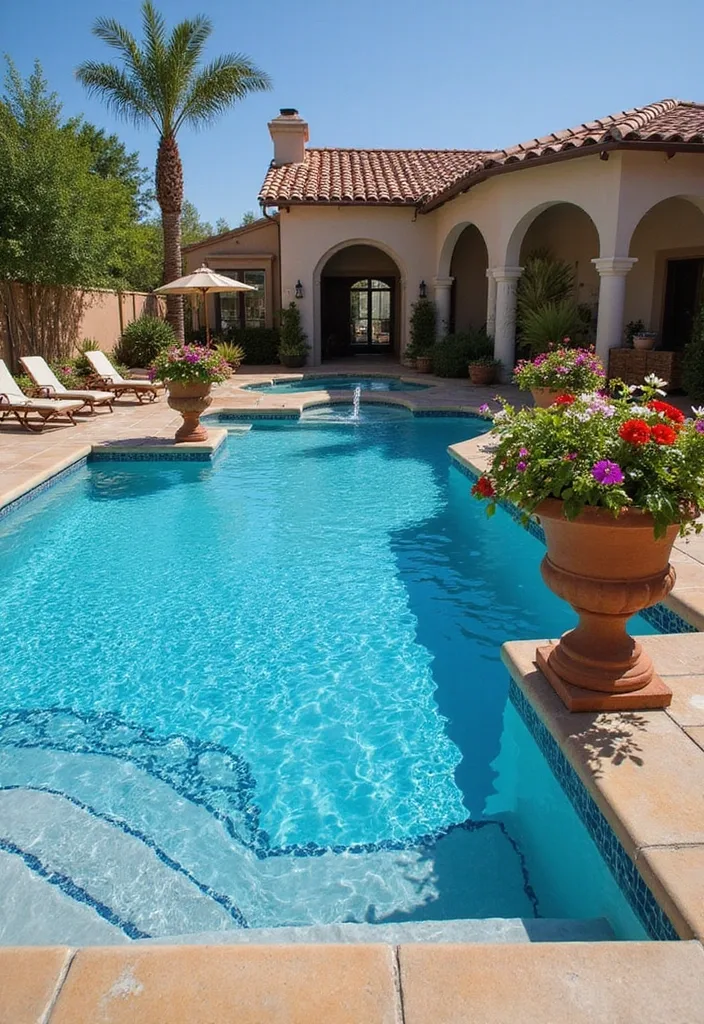
Freeform plus an attached spa is a classic inground layout for entertaining. The fountain jet is optional sparkle. The shape is the decision. Curves hide awkward lot lines better than hard rectangles. I would map sun, shade, and lounge rows before locking the freeform outline.
6. Eco Pond Shell
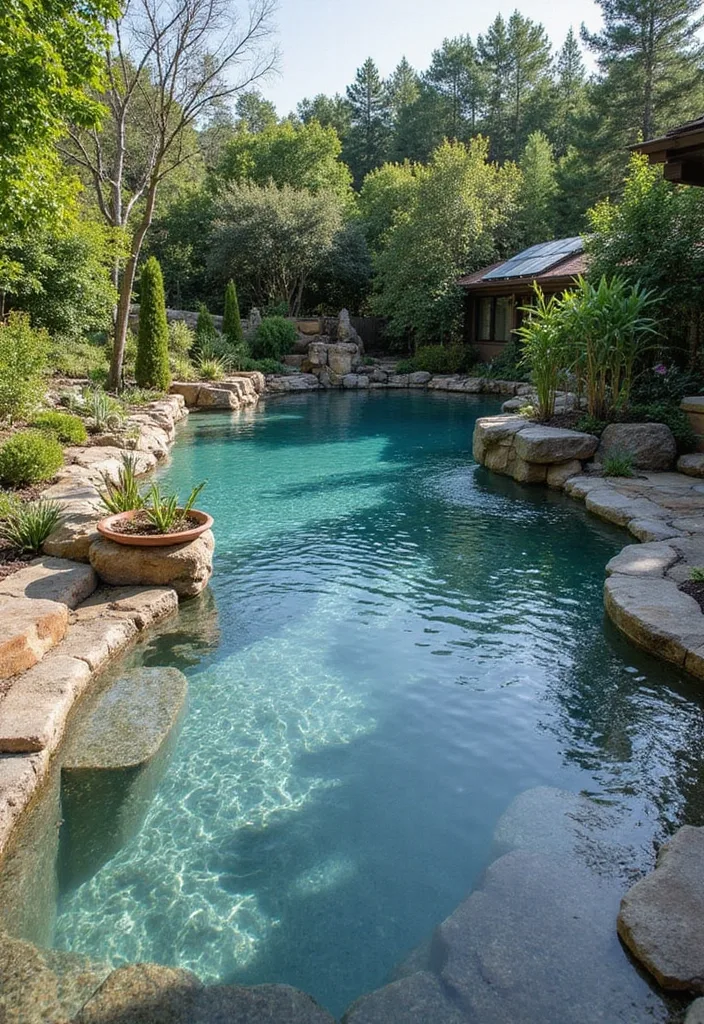
Swim-pond energy is still an inground build, just with organic edges and submerged stone shelves. Solar on the nearby roof sells the eco story, but the shell is what you live with. Ask hard questions about filtration type before you fall for the look. Pretty water that smells wrong is not a flex.
7. Swim-Up Bar Edge
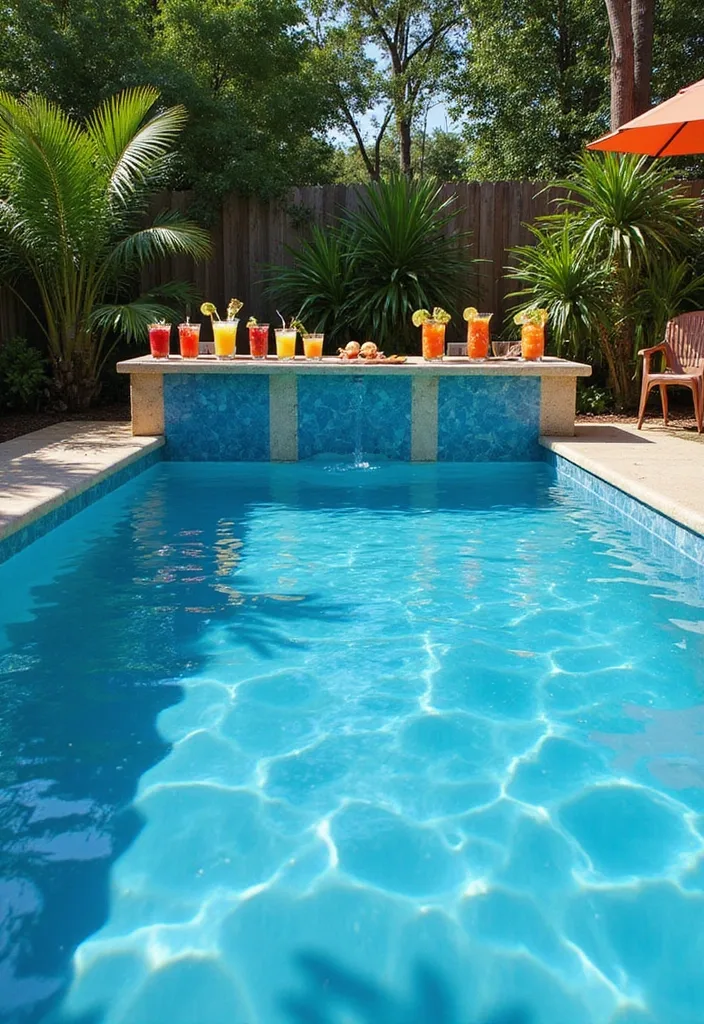
A swim-up ledge is a layout feature baked into the shell, not a tray you set on the deck. The raised stone bar wall with mosaic face creates a shallow hang zone. I love it for parties. I also want a clear deep lane left open so kids and lap swimmers do not collide at the drinks wall.
8. Raised Deck Kidney
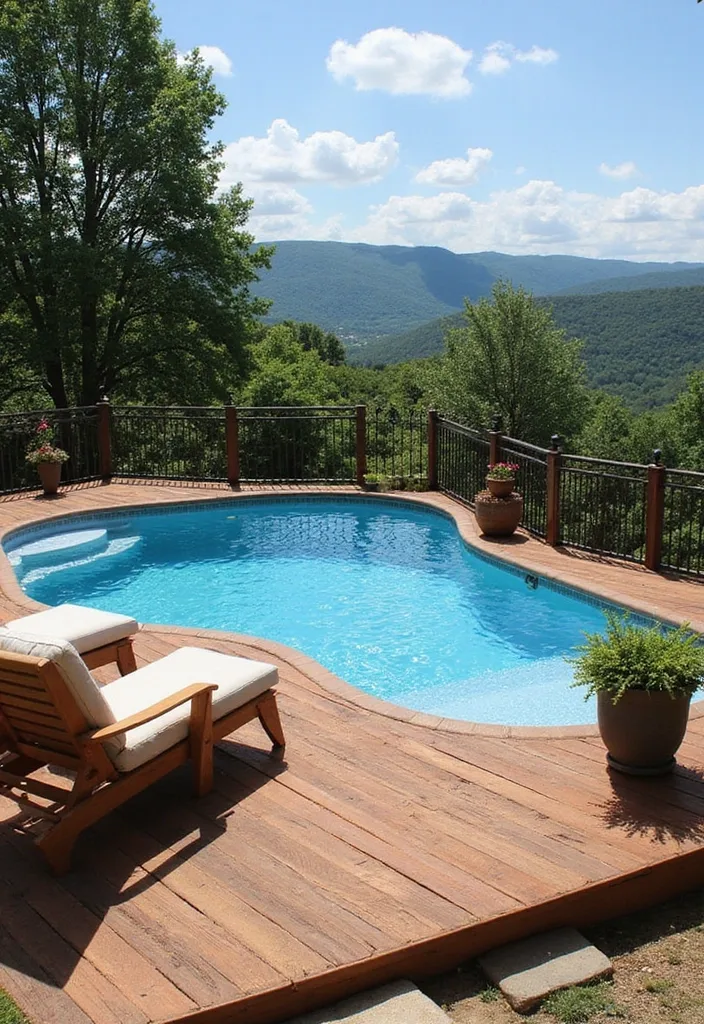
Raised does not mean above-ground cheap. This kidney is still an inground shell, just lifted into a wood deck platform with a view rail. The elevation is the layout move. You get drama and safety fencing in one plane. Perfect when the lot slopes and you refuse a sunken pit against the hillside.
9. Night Color Shell
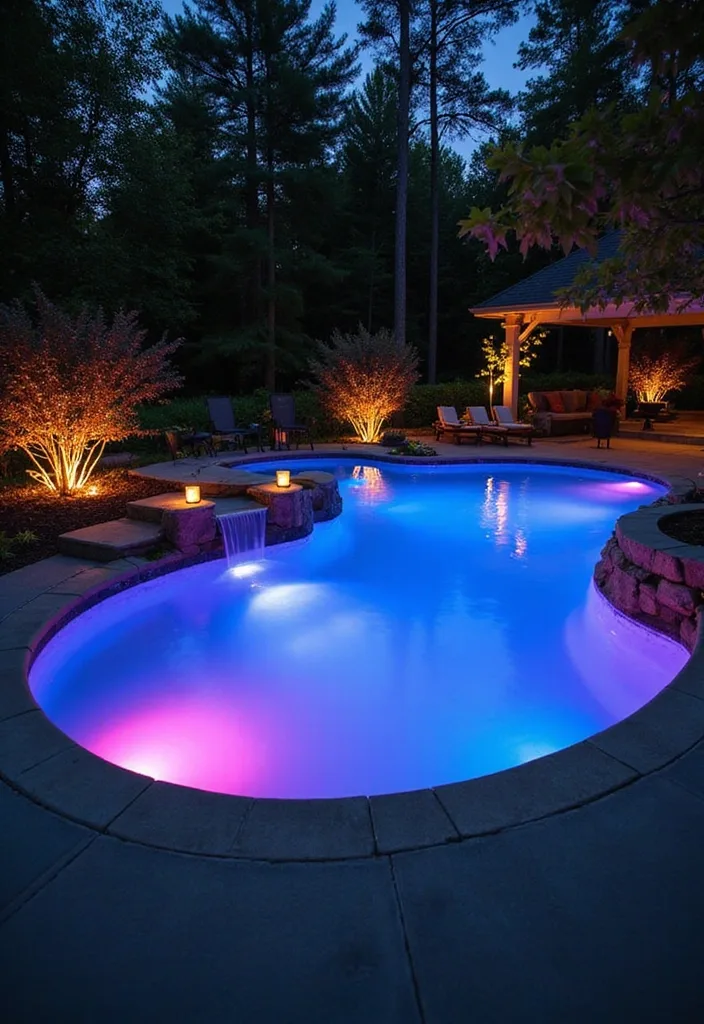
LED color does not change the shell type, but it changes how the freeform reads after dark. Pink and blue zones make shallow shelves and deep water look like different rooms. Plan niche lights with the pour, not as a retrofit. Night form is still form.
10. Multi-Curve Layout
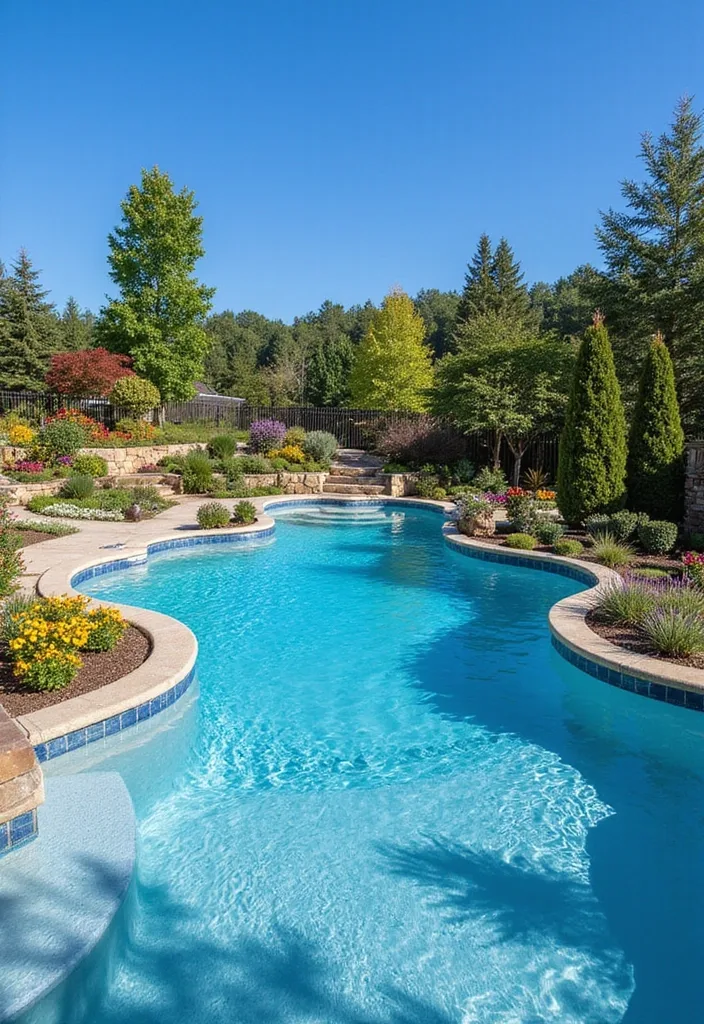
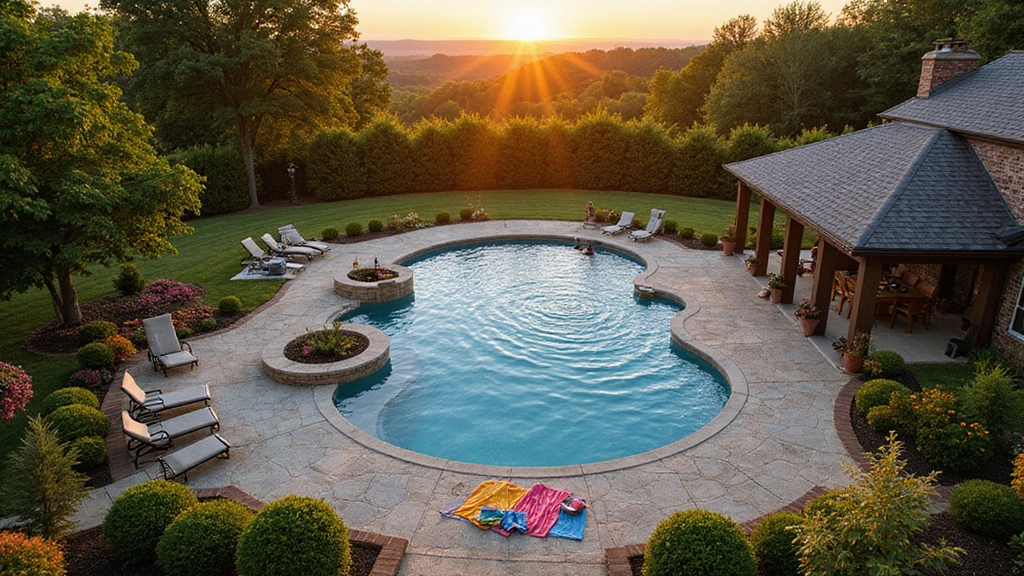
Multiple soft curves give you swim zones without walls. This is the family-friendly shell people mean when they want something less rigid than a lap box. Steps at the far end keep entry calm. I would pair this shape with clear shallow rules, then send lifestyle details to family backyard pool ideas.
11. Waterfall Rock Face
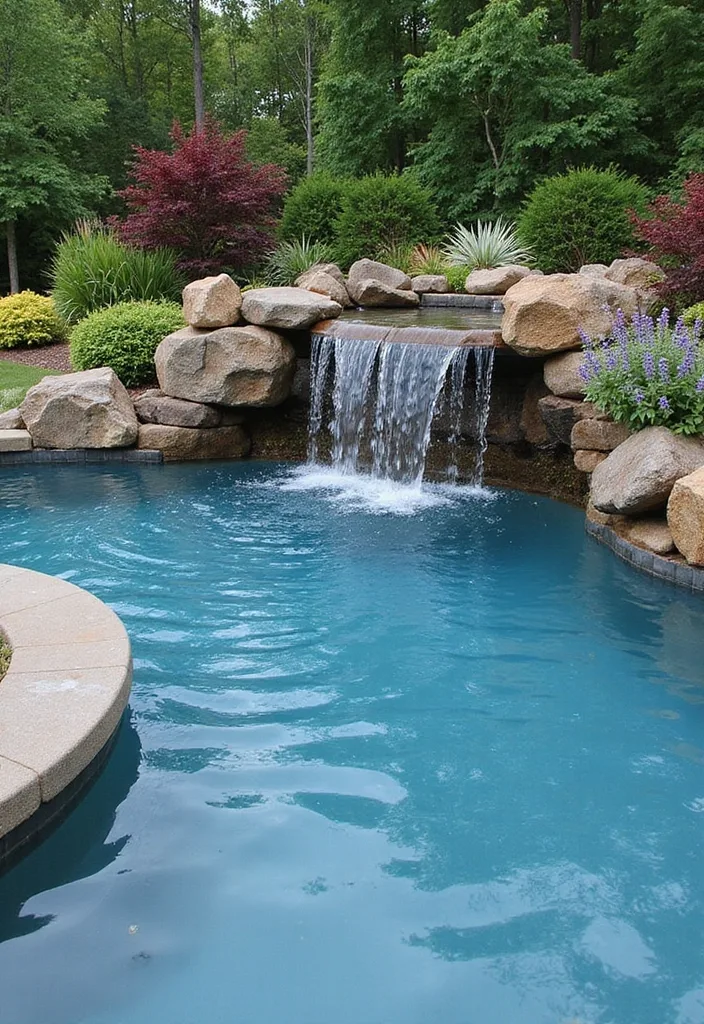
A rock waterfall is a built feature, not landscaping garnish. It needs plumbing, structure, and a shell edge that can take splash back. Three streams look lush in photos. In real life, I want a shutoff and a cleaning plan. Sound is part of the layout too. Some people love it. Some people hate it by week two.
12. Fire Pit Rectangle
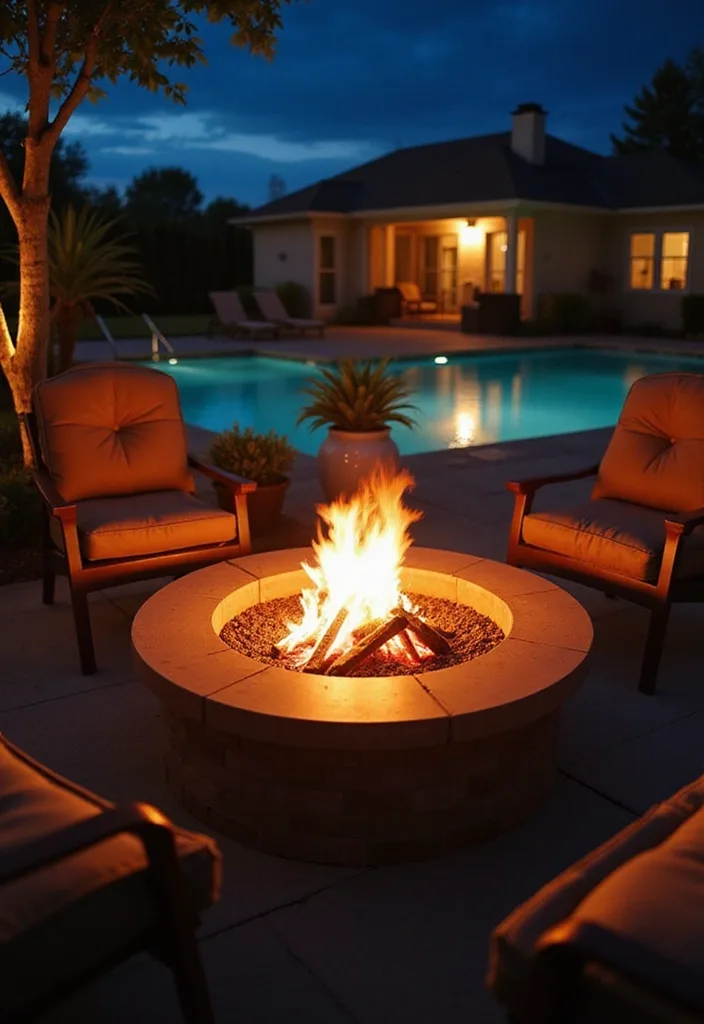
The shell here is a simple lit rectangle. The layout win is placing a fire pit room in the foreground so the pool becomes backdrop, not the only hang. That is still an inground plan decision: how much patio mass sits between house, fire, and water. I like this when evenings matter more than midday laps.
13. Roman End Shell
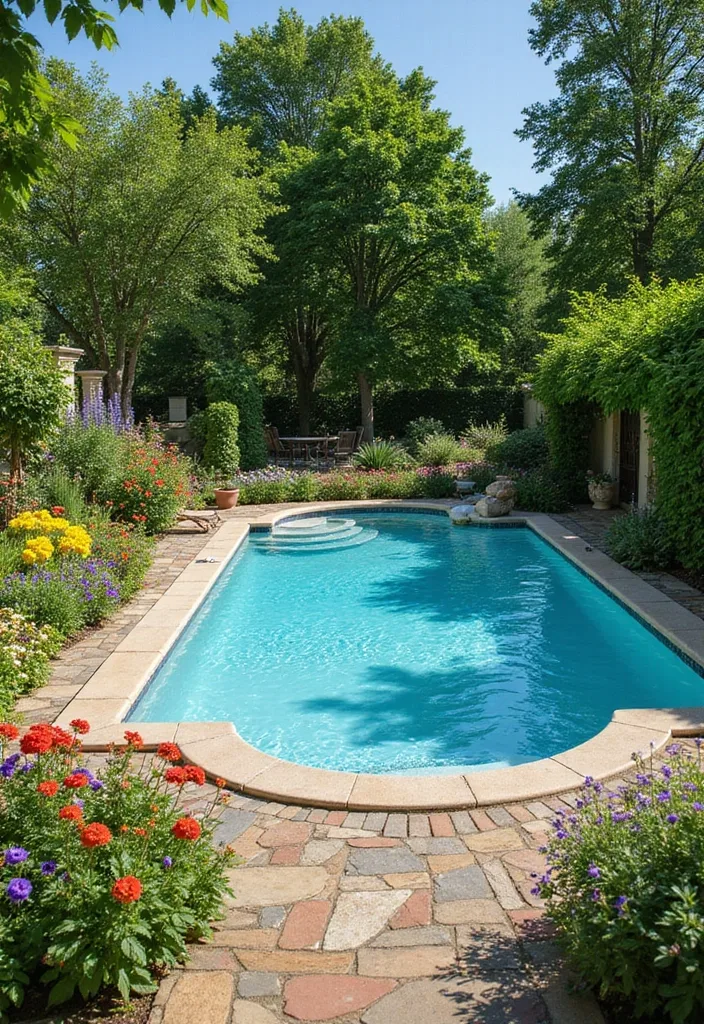
Rounded Roman ends soften a rectangle without going full freeform. You keep a swimable center and prettier corners. Flower beds wrap it, but the shell is the star. This is my pick when someone wants classic without a kidney stereotype.
14. Smart Control Layout
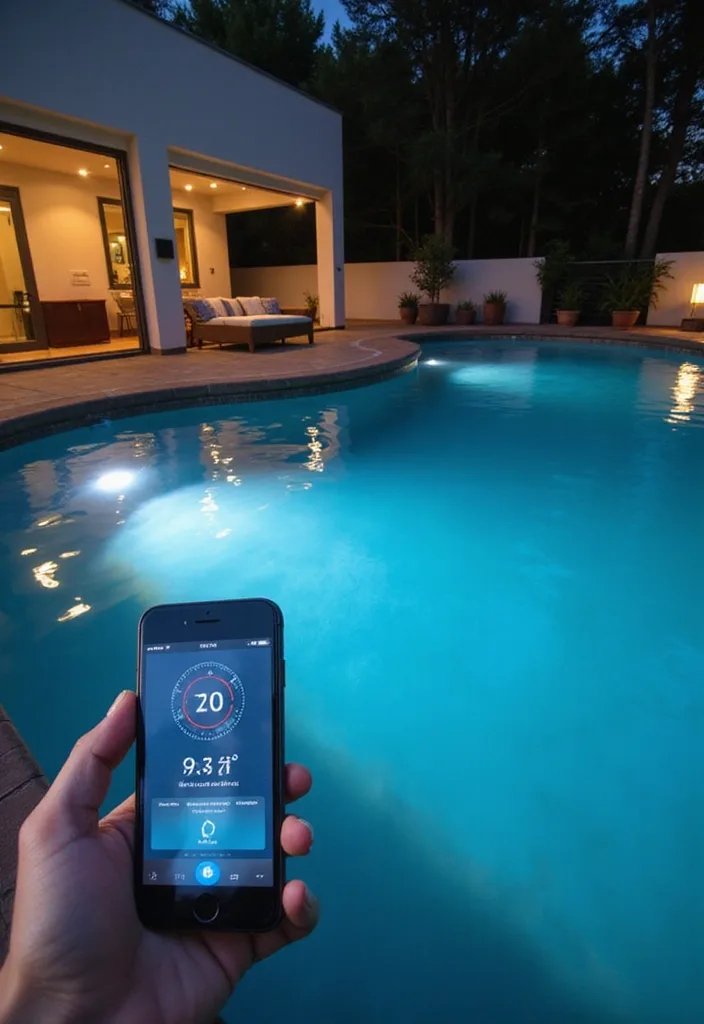
Automation does not invent a new shell, but it should be planned with the equipment pad and lighting niches. App control for pH and lights is only useful if sensors and returns were designed for it. I would rather spend on a clean kidney layout plus smart monitoring than a wild shape you cannot maintain from your phone.
15. Mosaic Spill Wall
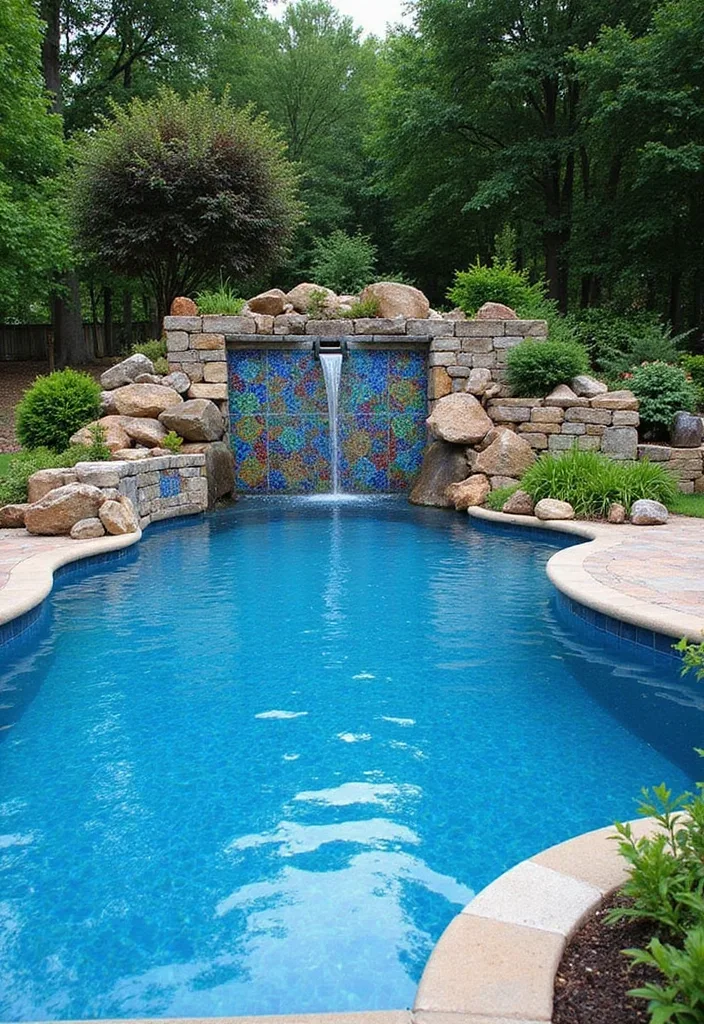
A sheet spill over mosaic turns the far wall into the focal plane of the shell. The pool outline can stay simple because the feature wall does the talking. Tile art needs a waterproof build done right. Cheap mosaic that fails looks worse than no mosaic at all.
16. Pergola Pool Edge
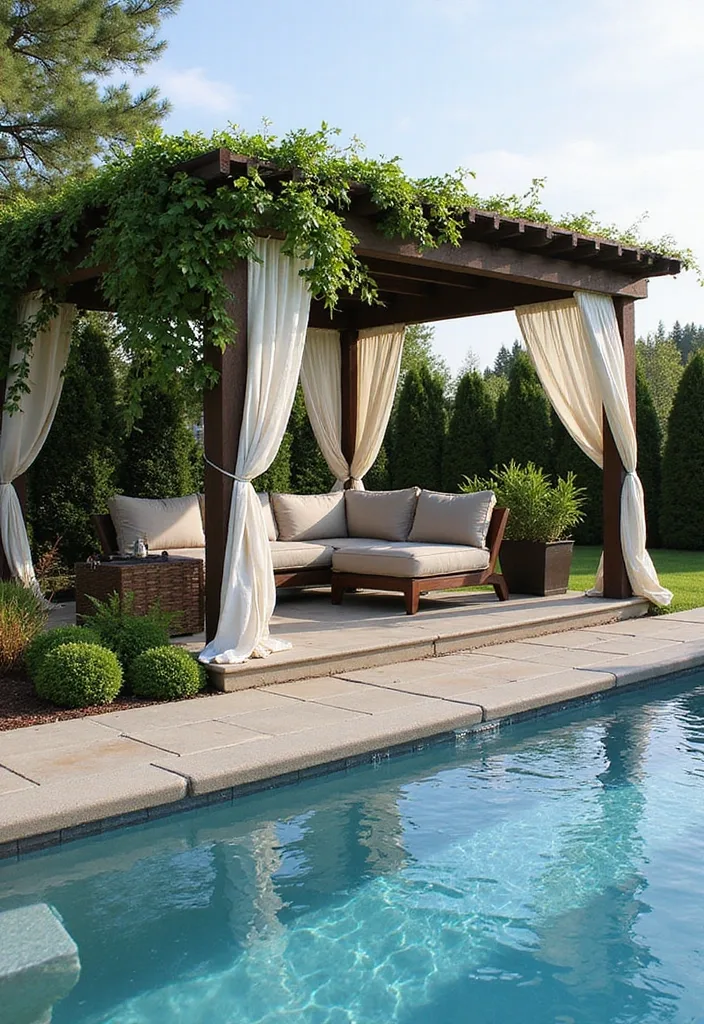
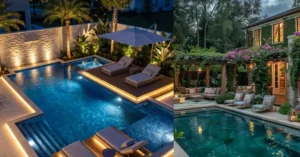
Shade structure placement is a layout call tied to the shell. A vine pergola on a raised platform next to the water creates a dry room without stealing the swim lane. I want the pool edge to stay walkable. Cabana energy is great until furniture blocks every exit ladder.
17. Carved Coping Curve
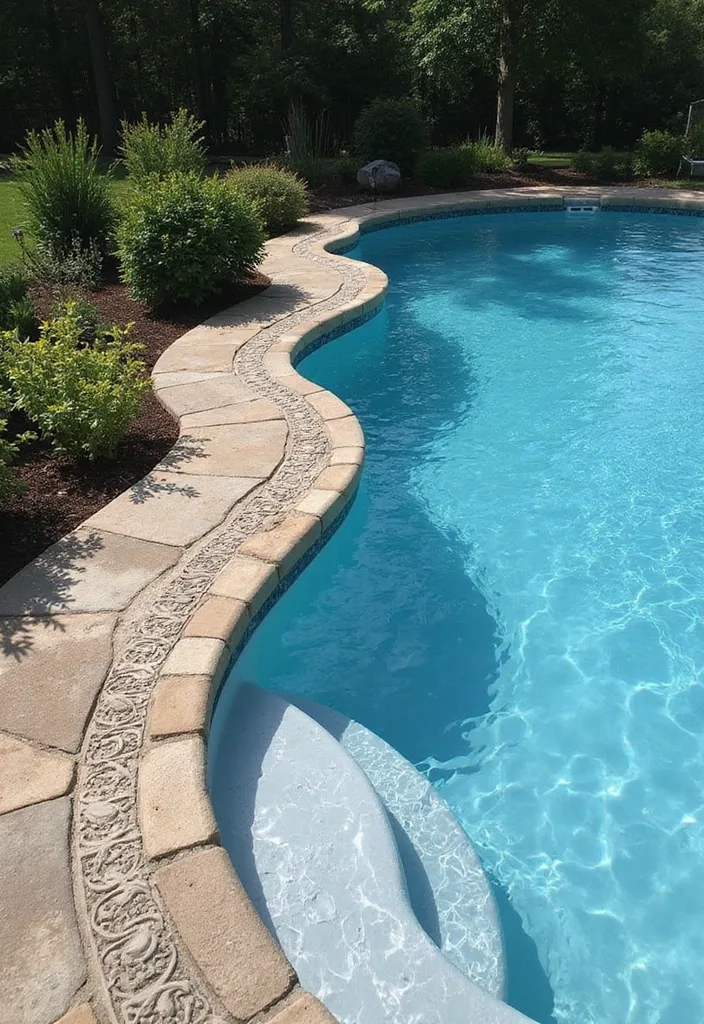
Edging is part of the pool form people forget to budget. A carved relief band along the coping makes a simple curve feel custom. Wide entry steps keep the luxury honest. If your shell is basic, upgraded coping can still make it look intentional without redrawing the entire outline.
18. Cover-Ready Rectangle
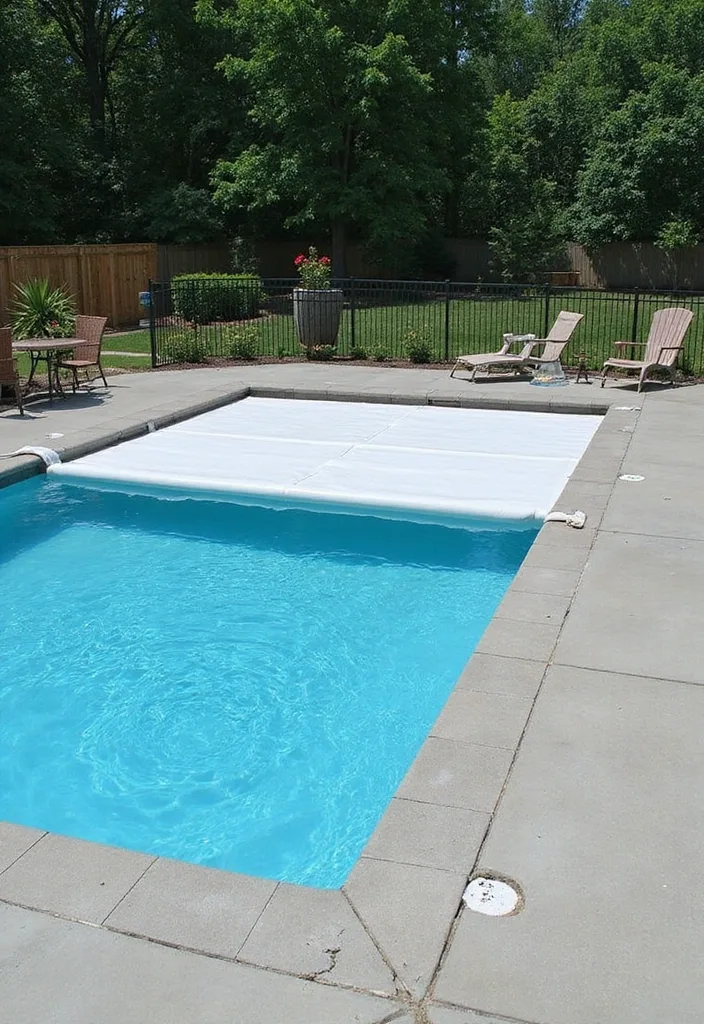
Automatic covers love clean rectangles. If safety and heat retention matter more than freeform vibes, design the shell for the cover track from day one. This look is less Pinterest-loud and more adult. I respect it. Pretty water you can close in thirty seconds beats a wild shape you avoid covering.
19. Art Axis Shell
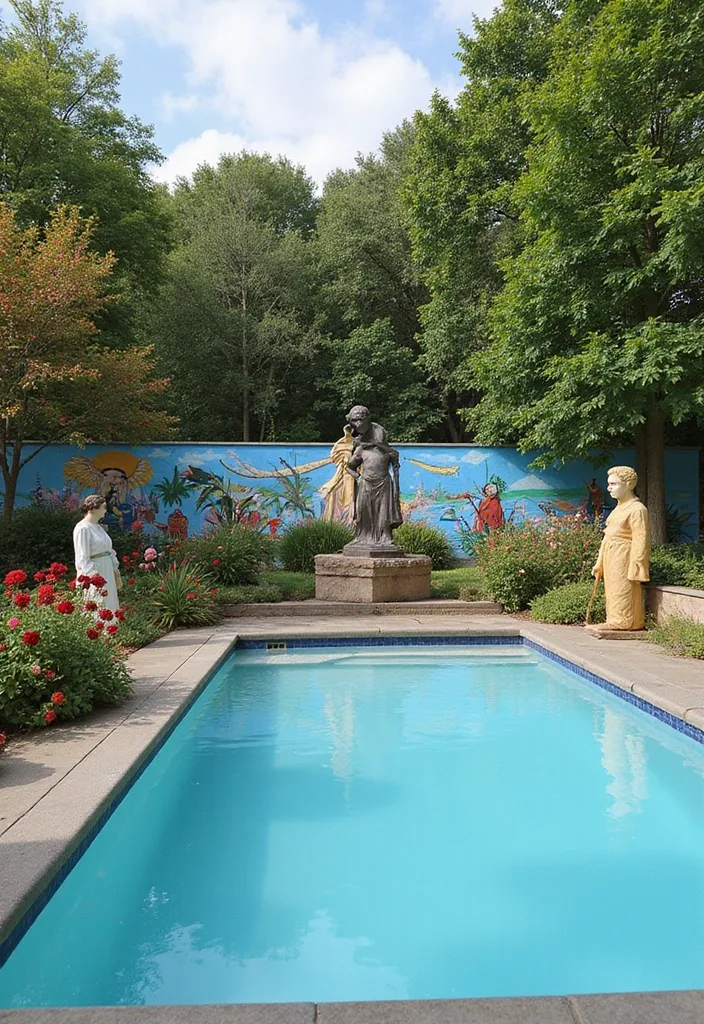
A long rectangle becomes a gallery axis when statues and a mural wall sit on the far end. The shell stays simple so the art can compete. I would only do this if the sightline from the house lands clean. Otherwise you get clutter. Layout is composition, not just volume of water.
20. Named Feature Wall
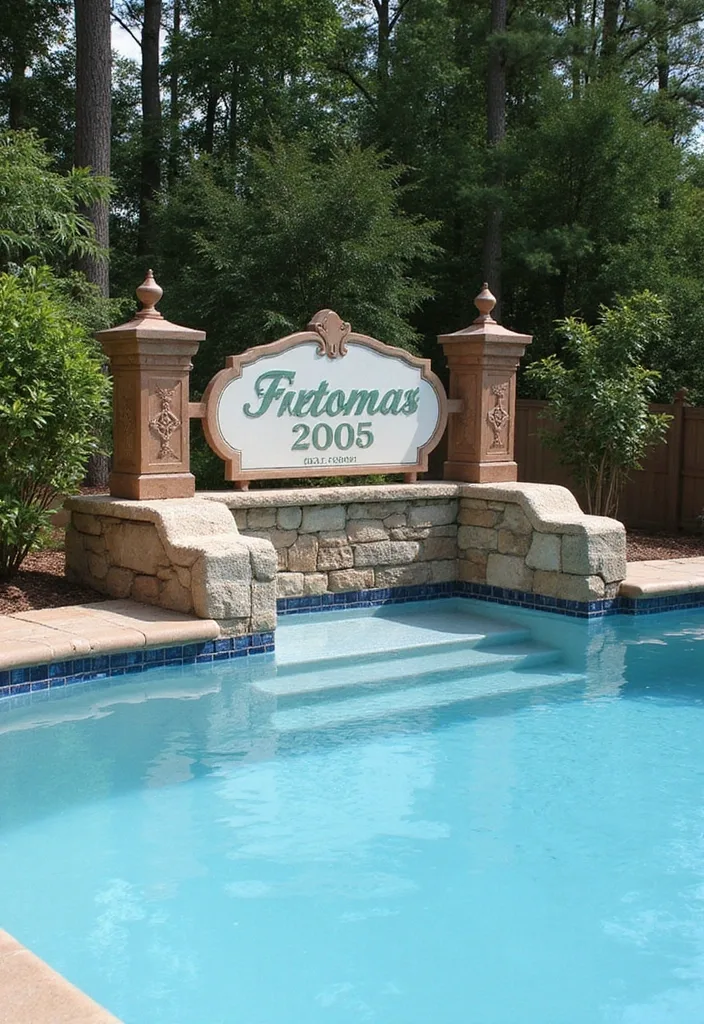
Personal signs are cheesy when they float on a stick. Built into a stone wall at the entry steps, they become part of the shell arrival. Year marks and names work if the masonry matches the coping. Soft tip: keep lettering readable from the patio, not tiny calligraphy that dies in photos.
21. Shape Moodboard
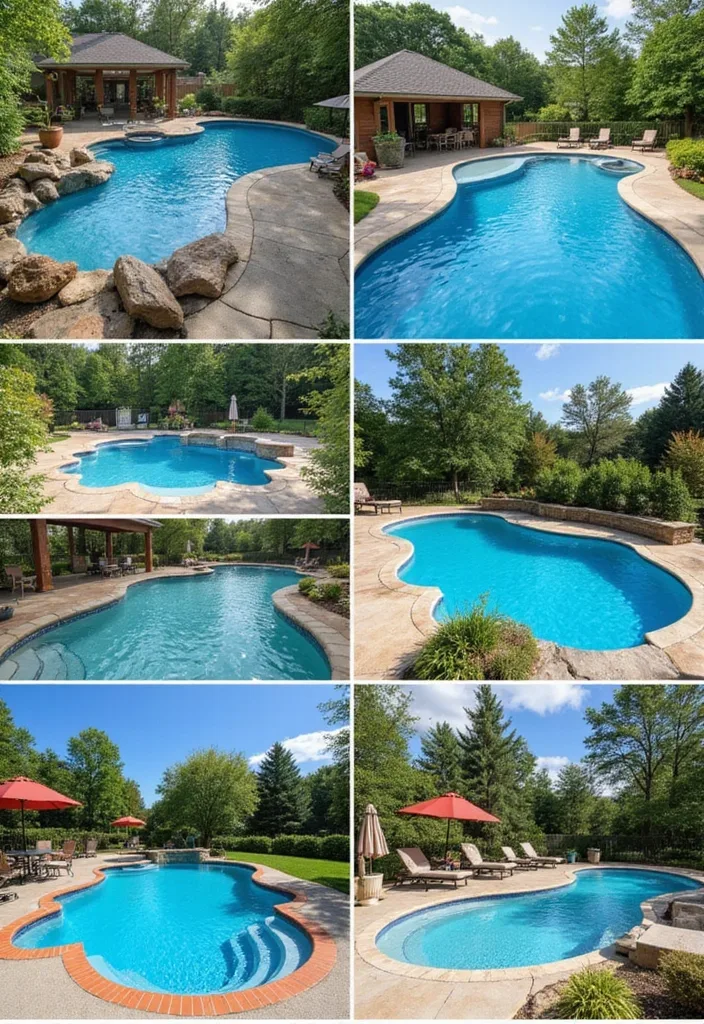
Use a moodboard like this to compare outlines side by side before you fall for one hero photo. Kidney, scalloped, boulder-edge, and long curves each change how furniture and fencing fit. Pick the silhouette that matches your lot and your weeknight habits, not just the loudest pin on your board.
How I Choose Shape
My filter for pools backyard inground is boring on purpose. First, can I swim a useful length? Second, is there a calm entry for kids or tired adults? Third, will a cover or winter plan work with this outline? Fourth, does the shape leave room for a dry hang zone? If any answer is no, I redraw before I romanticize tile samples.
I learned this after watching a friend build a wild freeform that photographed perfectly and fought every Saturday. They spent more time skimming weird corners than floating. A slightly simpler shell with one strong feature would have given them the same vibe and half the chores. Pretty that exhausts you is just unpaid landscaping labor in a swimsuit.
Also check access for excavation trucks and future equipment swaps. A clever kidney that blocks the side yard can turn every pump repair into a crane story. Draw the equipment pad and hose routes on the same sketch as the water. If those lines look awkward, the silhouette is not ready.
Concrete, fiberglass, and vinyl still matter for budget and customization, but shape is the decision you see every morning from the kitchen window. Fiberglass limits how wild the outline can get. Concrete lets you chase notches and custom spas. Vinyl can look clean on simpler plans. Match material to the silhouette you actually want, not the other way around.
Build your own version of this by choosing one silhouette, one built-in feature, and one maintenance plan that you will actually keep. That trio beats twenty unfinished Pinterest tabs. Start with the shell. Let plants and patio styling support it after the outline is honest.
FAQ
What are the benefits of installing an inground pool in my backyard?
An inground pool can raise property appeal, last for decades when maintained, and be shaped to your lot for swimming, lounging, or entertaining. The tradeoff is higher upfront cost and ongoing care.
How much does it cost to install an inground pool in a backyard?
Costs vary widely by size, material, site access, and finishes. Many residential projects land from roughly $30,000 to $50,000 and up, before landscaping and extras. Get local bids with the same shell scope.
What are the different types of inground pools available?
The main shell types are concrete (most customizable), fiberglass (faster install, smoother interior), and vinyl liner (often lower cost, liner replacements later). Shape options exist across all three, with different limits.