

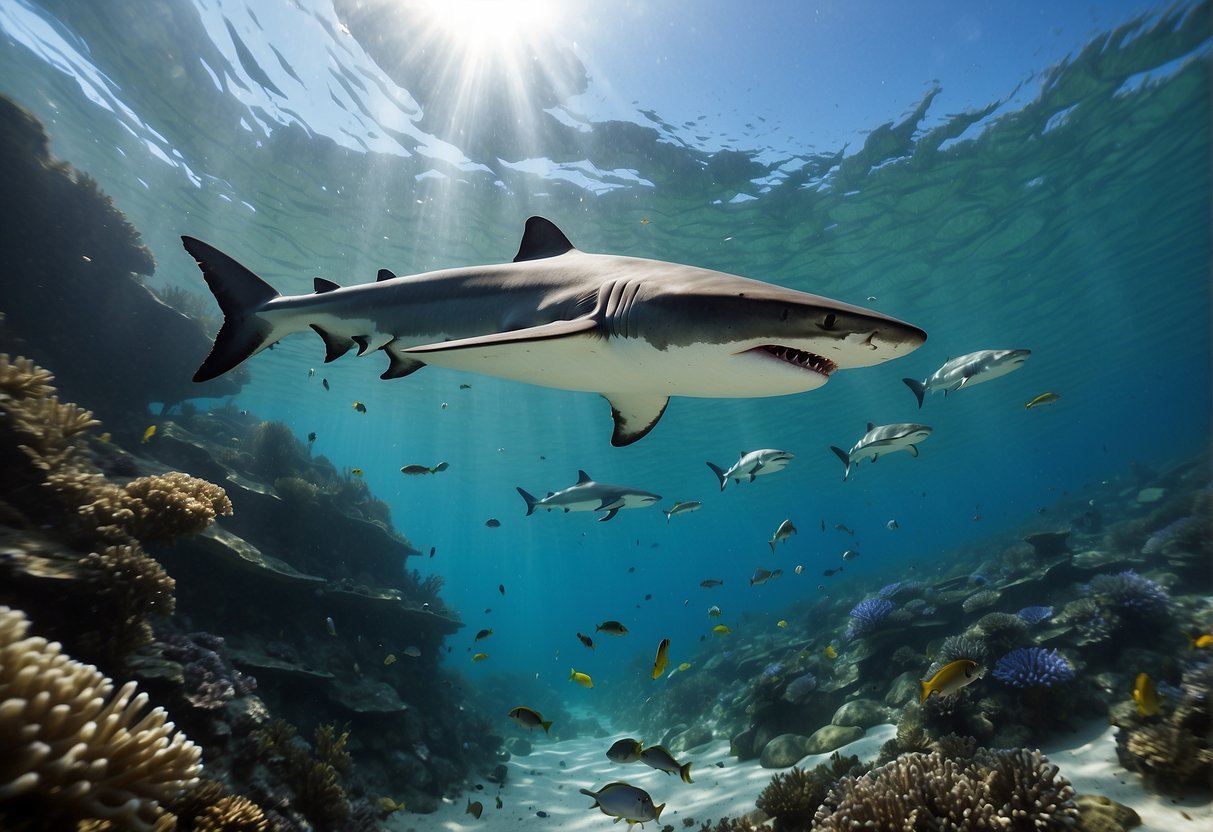
I am not here to romanticize predator tourism. If you want to know how to swim with sharks without turning into a cautionary TikTok, you need calm behavior, the right operator, and a hard line on which species belong in a cage. I have snorkeled near reef sharks off San Diego day boats and sat through enough briefings to know the difference between a controlled swim and a bad idea.
How to Swim with Sharks?
Read Shark Behavior First
Sharks are not movie villains, and they are not stuffed animals either. Fast thrashing, panicked kicking, and chasing them for a photo can pull curious attention you do not want. Smooth, horizontal swimming looks closer to normal fish traffic. Vertical flailing looks like something struggling.
Staying calm is not a vibe tip. It is the whole protocol. Keep your body level, keep your eyes on the animal when it is close, and stop inventing sudden direction changes. Reef and nurse sharks are the usual starter species on reputable trips because they are generally less reactive in those setups. That still does not mean you get to poke one for content.
Gear That Actually Helps
Good gear will not make you invincible. It will keep you from becoming the person who loses a mask and starts thrashing. A well-fitted snorkel or proper scuba diving setup matters more than a novelty shark shirt. A solid dive suit adds abrasion protection and warmth so you stay focused instead of shivering into bad decisions.
| Gear Item | Purpose | Recommended For |
|---|---|---|
| Snorkel and Mask | Breathing and seeing underwater | All types of shark encounters |
| Dive Suit | Protection and warmth | Cooler waters, cage diving |
| Fins | Efficient swimming | Navigating currents |
| (Optional) Shark Deterrent | Added safety measure | Close encounters |
Fins help you hold position in current without desperate kicking. If your open-water skills are shaky, fix that before you book a shark trip. Our notes on how to swim in deep water cover the confidence gaps that show up fast once you leave the pool wall.
Pick Safer Species
Not every shark belongs in a free-swim Instagram fantasy. Lemon sharks and many reef sharks show up in beginner-friendly guided encounters for a reason. They are still wild animals. Your job is to follow the guide, not audition for main character energy.
Bull sharks, tiger sharks, and great white sharks belong in a different category. If you want those animals up close, cage diving with a vetted operator is the adult choice. Free-swimming for clout near apex predators is how people end up in news clips. I am not interested in that version of bravery.
| Shark Species | Suggested Encounter Type |
|---|---|
| Nurse and Lemon Sharks | Beginners, no cage necessary |
| Reef Sharks | Intermediate, no cage necessary |
| Bull, Tiger, Great Whites | Experienced, cage diving advised |
Global Shark Swimming Destinations

Pacific and Indian Hotspots
Some places built reputations for shark swims that are more structured than random beach luck. Ningaloo Reef in Australia is known for whale shark seasons. The Galapagos Islands in Ecuador draw divers for schooling hammerheads. Fiji’s Beqa Lagoon runs shark dives with mixed species under guide control. Pick operators with safety briefings that feel annoyingly thorough. That annoyance is a feature.
- Australia: Ningaloo Reef – Ideal for whale sharks.
- Ecuador: Galapagos Islands – Known for hammerhead sharks.
- Fiji: Beqa Lagoon – Diverse shark species.
Timing Beats Guesswork
Season windows matter. Whale sharks around Belize and Gladden Spit are often targeted from March to June during fish spawn patterns. Tiger Beach in the Bahamas is a known tiger shark destination with clearer winter-to-spring windows, roughly November to May. Showing up in the wrong month is how you pay for a boat ride and get a disappointment story.
| Location | Best Time | Shark Species |
|---|---|---|
| Belize | March – June | Whale sharks |
| Bahamas | November – May | Tiger sharks |
| Philippines | January – April | Thresher sharks |
Eco Tourism Filter
If an operator treats sharks like props and never mentions conservation, walk away. Eco-minded trips are not automatically soft. The good ones still brief hard on spacing, touch bans, and baiting rules. Your money either funds better practices or funds chaos with a GoPro mount.
- Choose tours that support shark conservation.
- Prefer operators tied to research programs or transparent local protections.
I care about the experience and the animals. A clean encounter that funds monitoring beats a reckless chase clip every time. That is the version of ocean access I will keep recommending.
Safety Procedures and Conservation

Do This, Skip That
- Do: Stay calm and make slow movements. Keep a horizontal profile and listen to the guide’s spacing calls.
- Don’t: Wear high-contrast flashy gear just for photos, chase the animal, or splash like you are fighting the water.
If you are already nervous in open water, practice in lower-stakes settings first. River and ocean conditions are a different mental game than lanes. Our piece on swimming in the river is useful if your confidence drops the second the bottom disappears.
Tourism With a Point
- Supporting Local Efforts: Book operators that fund protection work, including respected sites like parts of the Galapagos Islands.
- Education: Learn from programs such as the Maldives Whale Shark Research Programme so the trip is more than a thrill checklist.
Unexpected Sighting Protocol
A guided shark swim is one scenario. Spotting a shark while you are just swimming offshore is another. Stay calm, keep facing the animal if it is close, stop thrashing, and move toward exit points without turning into a splash fountain. Do not play dead for the camera. Do not swim after it for a better angle.
From a technique standpoint, your kick should stay compact and purposeful. Big panicked kicks burn oxygen and advertise distress. If you already struggle with ear pressure or open-water calm, sort that before any predator trip. Practical health basics matter more than buying a deterrent gadget you barely understand.
Also worth saying out loud: dawn and dusk feeding windows, murky water, and fishing activity raise risk in unmanaged swim spots. If you are free swimming at a random beach with baitfish boiling around you, that is not the same category as a guided reef shark tour. Context is everything.
My verdict on how to swim with sharks: do it with a serious operator, pick species that match your experience, keep your movements boring, and leave the cage for animals that deserve distance. The honest flex is coming home with a clean story and all your limbs. If you want more ocean-safety framing for swimmers who leave the pool, start with deep-water comfort and build from there, including calm skills covered in ear pain after swimming when pressure and panic start stacking.
Before You Book
I ask people the same screening questions I would ask a nervous adult before their first ocean dive. Can you clear a flooded mask without freaking out? Can you tread water for a few minutes without gasping? Can you follow instructions when adrenaline hits? If any answer is no, book pool or bay practice first. Shark water is the wrong classroom for basic skills.
On a San Diego boat day last year, I watched two tourists ignore the guide and kick toward a reef shark for a selfie angle. The animal peeled off. Nobody got hurt. The trip still got worse because the guide had to babysit ego instead of managing the group. That is the soft failure mode. The hard failure mode does not make for funny stories.
When you compare operators, look for written rules on touching, chumming, group size, and cancel conditions. Ask who leads the in-water briefing and how long it lasts. A five-minute shrug is a red flag. A twenty-minute briefing with demos is closer to what I want. Also ask what happens if conditions turn murky mid-trip. Good teams abort. Bad teams push for reviews.
One last honesty check: if your only goal is a viral clip, you are already optimizing for the wrong outcome. Optimize for controlled proximity, clean exits, and respect for the animal. That mindset is what keeps shark tourism from turning into another extractive trend people regret later.
Worth repeating once: your fitness level in a pool does not automatically transfer to saltwater with surge, cold, and an animal that can outswim you without trying. Train for the environment you are entering. Then book the trip. That order is boring, and it is correct. If you only remember one line from this whole piece, make it that one, then actually practice it before you pay a deposit.
FAQ:
How do people swim with sharks?
Usually with a guide in a controlled setting. You stay calm, move smoothly, keep spacing, and follow the operator’s rules for that species.
What to do if I see a shark while swimming?
Stay calm, avoid splashing, keep awareness of the shark, and move toward a safe exit without chasing or turning your back in a panic.
How can you be safe around a shark?
Choose reputable operators, avoid erratic movement, swim with a group when advised, and skip unmanaged dawn or dusk sessions in murky water.
Are sharks good swimmers?
Yes. Sharks are highly efficient swimmers, which is exactly why your own movement should stay controlled and intentional around them.